The martyred life of a vegan

I’ve been vegan for 18 years. When I went vegan there were rudimentary cheese alternatives. This didn’t both me as I would eat cheese made from potatoes whilst singing, “Potato cheese, potato cheese, cheese made from… potatoes!” Others tasted it and screwed up their face whilst I chomped down on a cheese and Marmite sandwich. Or a cheese and pickle sandwich. Oh salty joy! Then the novelty wore off. Vegan cheese is expensive. And I returned to my first loves, peanut butter and hummus. Although not together. I tried this once and it wasn’t great.

Many years on,  and veganism has risen. There are some vegan cheese options which make potato cheese look like potato. But I haven’t craved cheese, so I’ve largely ignored the options. Until two weeks ago when I was offered a free sample of a faux ‘Tom’ cheese made from fermented cashews. I hated it. It was fermenty and strong and, well, cheesy. Is this imitation so good, and 18 years without cheese means that now I hate cheese? Or alternatively, is this vegan cheese simply bad?

H0: Vegan cheese tastes good (but I don’t like cheese).
H1: Vegan cheese does not taste good.

I ran two experiments with my colleagues as the test subjects.

Experiment one

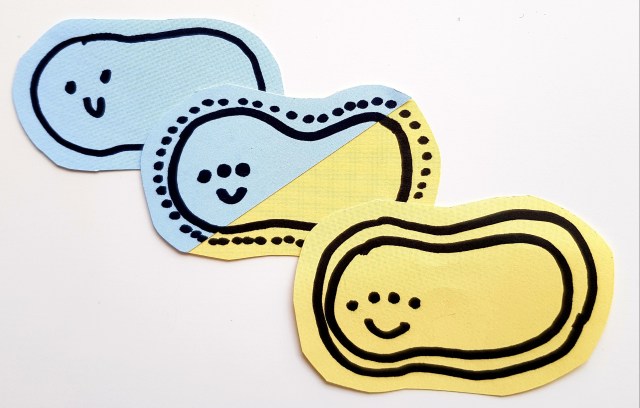
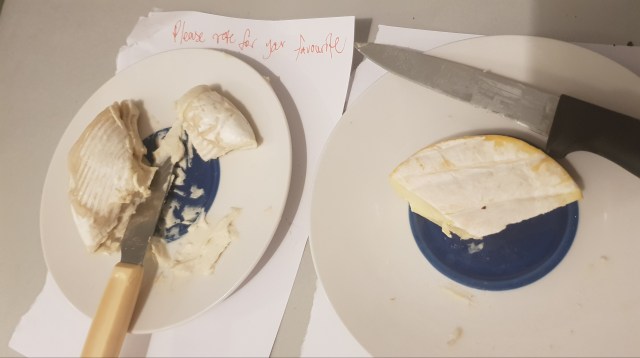
I left out two cheeses at work, without their labelling.
Cheese 1: The same vegan Tom cheese that I was given a sample of.
Cheese 2: A normal Tom cheese.
I asked colleagues to state which cheese they preferred.
cheese2photo.jpg

The results were simple. Only 14% (2/14) preferred the vegan cheese. (This wasn’t rigorous because people could see the responses, so social influence has an effect.)

But wait! Perhaps this vegan cheese was particularly bad. So back to the shop I go…

Experiment two

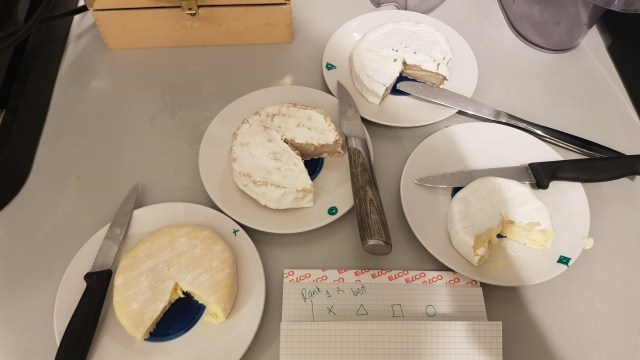
Again, at work, I left out cheeses without their labelling. This time I left out four cheeses.
Cheese 1. Vegan cheese A
Cheese 2: Vegan cheese B
Cheese 3: Dairy, lactose free cheese
Cheese 4: Normal Tom cheese
cheese4photo

Both vegan cheese A and B were also made from fermented cashew nuts, but they were not the same as the original vegan cheese that started this all. Now I asked for a ranking system. The results are shown below, where the cheeses are presented in order of popularity.

CheeseAnalysis

Fig 1. The ranking of the four cheeses, ordered by most popular to least.

The popularity order was determined by comparing the mean score. And out of interest, three pairwise comparisons confirm that the top three cheeses ranked similarly:
1. Normal cheese with Vegan A cheese (Cliff’s delta -0.19),
2. Normal cheese with Lactose free cheese (Cliff’s delta -0.27),
3. Vegan A cheese with Lactose free cheese (Cliff’s delta -0.05).

Pair wise comparisons with Vegan cheese B were not required as it is a clear loser here.  From the Cliff’s delta score, Vegan cheese A and Lactose free cheese B are almost equally popular.

So it seems that vegan cheese can be enjoyed nearly as much as dairy cheese, especially if it’s lactose free dairy cheese. But vegan cheese varies a lot. Out of the three vegan cheeses my colleagues tasted, only one could compete for the taste buds of non-vegans. So did I like the popular vegan cheese? Well no. In fact, I could tolerate Vegan cheese B most easily, perhaps because it had less flavour.

In conclusion, I reject the null hypothesis. Even though some vegan cheeses can win over cheese lovers, overall, the fermented cashew lacks the cheesy goodness that my colleagues crave.

Why deprive myself of cheesy goodness? To answer that I have to describe my consumer mindset, which is mostly driven by my crippling indecisiveness.

Three dimensional shopping

I’m a dithering and stressed shopper. Few moments in my life have filled me with self-doubt more than staring at 30 options for tweezers in Boots. I realised that I am a novice to the decision factors involved in tweezer shopping.

lots-of-guns-6

If I was Neo, the film would have ended with me sitting on the floor, Googling the difference between all the options.

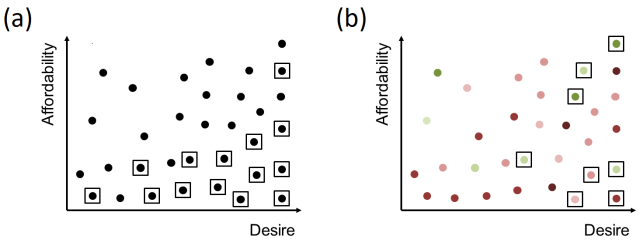
Instead of tweezers, let’s consider the simpler task of clothes shopping. Because when choosing whether or not to buy a new clothing item, my decision process used to be boiled down to (i) desire (ii) affordability, see Fig 2(a).
3Dshopping12

Fig 2. Every circle represents a new item of clothing that gets my attention. A surrounding square represents a purchase. Plot (a) represents how I used to shop, weighing up desire and affordability only. Plot (b) represents how I shop now.  The third dimension, ethics, is represented by a linear scale from unethical (dark red) to ethical (dark green).

Suppose every circle here represents a new item of clothing that, for a brief moment, gets my attention. And every surrounding square represents that I brought the item.
When shopping, my indecisive brain is overloaded so I used to buy cheap things unquestionably in order to avoid making decisions about whether or not I truly wanted them. And very rarely, I’d buy an expensive item that I really, really wanted.
With only affordability and desire as my explicit decisions factors, I’d walk out of Primark with bags of shopping. I knew this shopping process was creating a demand for dangerous working conditions, and I’d feel a bit of guilt, but guilt doesn’t stop me wanting something!

A few years back I started adding the ethics of the item as a third dimension.
As consumers, we all have our ethical boundaries. Making mine explicit as a decision factor restrains my dithering a bit.

Suppose all the items before can be coloured from green to red representing ethical to not (respectively). Now I shop more like Fig 2(b).

With the separation of ‘desire’ and ‘ethics’ I don’t buy cheap, unethical, things unless I superdouperreallytruly want them. The consequence is that I own fewer pointless, pretty things. Which is perhaps a downside, because put a pretty print on anything, and I want it. Yes. Anything.

On the upside, I’ve indulged in a few more spectacular items that come with twinges of smug joy. And on a confused side, my loved, unethical, purchases come with twinges of guilt each time they’re used. Which in many cases, is daily. Fortunately they’re so pretty that they distract me from my inner-conflict.
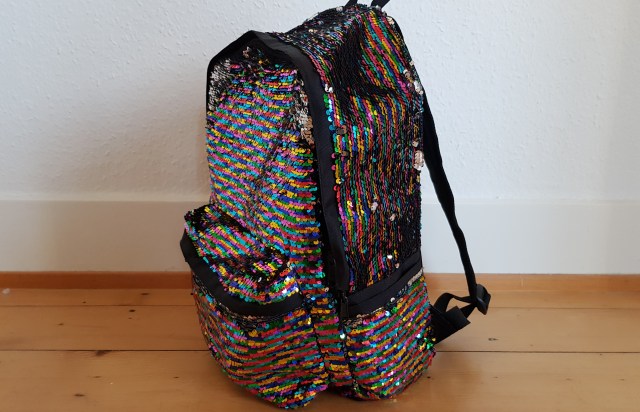
sparklerucksack-e1570978563314.jpg

A sparkly bag is my bacon sandwich. The joy is far too great for any other thoughts.

The non-linearity of ethics

Despite my representation of ethics on a linear scale of unethical to ethical, it’s impossible to quantify the ethics of a lifestyle. I once spent a month in Bolivia primarily eating Oreos, which although vegan, contains palm oil. It’s unlikely that my Oreo month was the right thing for the world.

And I will continue to make unethical choices daily, so I can’t judge, and I don’t wish to be judged. Ethics and personal choices are complex and impossible to get right. We all have our own decision factors to balance. My choices relate to me, the many privileges that I have, and my easily-overwhelmed indecisiveness. I can’t get it all right, but veganism seems like an easy step towards something that is, at least, in the right direction. So although I miss out on cheese, and whatever other taste sensations warrant pity for vegans, I choose my simpler life over and over. And as it turns out, I don’t even like cheese! So I guess I’m not a martyred vegan. I’m a happy vegan!
Posted in Uncategorized | Leave a comment

When you know, you know

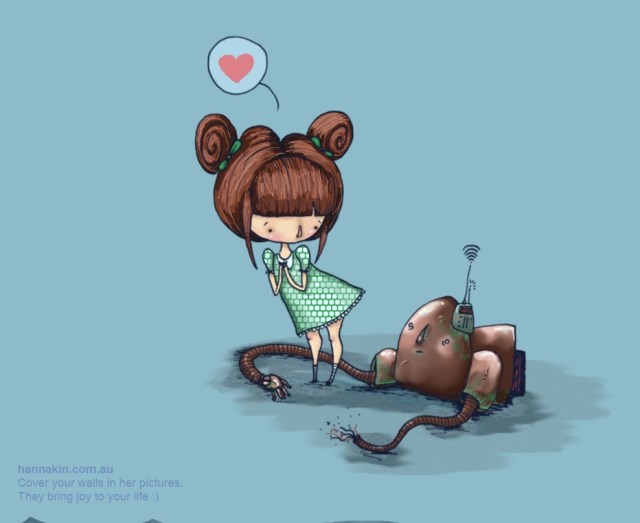
RobotLove_Hannakin.jpg

My work relationship status: It’s complicated.

A career in academia is undoubtedly engulfing. Is that bad? I mean, research is great! There’s moments when I’m in the zone. I feel that I have the time to learn (or I’m learning efficiently, and then I feel oh so smart!). I’m engaged in what I’m learning and marvelling at how things work, and all the smart people before me. And then I get to build on top of that foundation. I interpret the problem in my own unique way, and then make my tiny contribution. Sometimes my contribution is, “Well doing something this way is pointless, and no help”. Which is sad for me, but I learned something which shapes my next move. And maybe I can share my learning, and then I’ve saved someone else from wasting their time! How kind of me.

So I want to say: I love my job! I don’t say it enough to my colleagues, because instead I complain. I complain that I don’t get to do what I love about my job 100% of the time. I’m a spoilt brat. We all are! I’m sure someone who gets to live their dream of reviewing new computer games, complains that they have to actually, like, write the review. Not only is complaining cathartic, it unites us as social beings. That’s why jokes in Christmas crackers are objectively bad – we can all grumble together because what did the fish say as it swam into a wall? Dam. 😀

Whilst I’m singing the praises of academia, I think it’s nice that generally our complaints are directed at buggy-code, at nonsensical results, at funding success rates, at writing frustrations, at paper formatting guidelines, at making colourful plots black and white, at having to write in Word, at understanding and reproducing papers, at leaving too little time before presenting, at understanding previous versions of our own code, at the repeated mistake of calling any document ‘Final’, at trying to gauge how many comments are necessary, at realising a basic assumption in your model is incorrect, and so on. That is, I rarely hear, or make complaints, about individuals who we believe inhibit our work (except for Reviewer 2), which is perhaps not true for many jobs where your success is dependent on a few people believing in you? With research, a whole community needs to be believe in you! Oh what a relief that is!

But, for me, complaining quickly becomes self-directed. When I feel crap about my work, I feel crap about myself. Why is it taking me so long to learn this? Why do I seem unable to run a code without magically sprinkling bugs into it? If an antidote to impostor syndrome is sharing, I’m all over that!

Yet what example does all this complaining set to PhD students? They know that I regularly work weekends. They hear me degrade my work and myself when I don’t hit my self-set targets? By definition, I’m better at research than a PhD student. Yet I’m complaining, so what does that do to their self-belief? But what can I do? Not share? Give the impression that I find the whole thing easy? Firstly, no one would believe me as I saunter in, “I revisited a code I wrote last year. What an exemplary coherent piece of efficient coding!”. Secondly, such a facade would probably pass on a whole load of other issues.

I don’t know what the answer is. Logically, it’s about also discussing the good. But that’s difficult to quantify. Maybe it’s my Britishness – grumbling comes naturally, but discussing positive feelings is a more awkward affair. Sure, I can say that I like the autonomy. And the people in research institutes are, in my biased opinion, generally a delightful mix of human beings. But it’s deeper than that. Every time I’ve questioned leaving research, including applying for jobs outside of research, I’ve felt a loss. During one of these periods, I was in a talk and some Matlab plots came up. I felt my heart sink at the idea of no longer using Matlab. Genuine grief for Matlab?! (And now I’m using R anyway. And one day I’ll find time to properly learn Python…)

And because I can’t articulate what I enjoy about my work in a tangible way, I question what my motivation for staying in research is. Is it a happy relationship, or is it sustained out of fear of leaving for a ‘real job’? But then don’t we all question our long-standing relationships from time to time? We forget how fortunate we are and what drew us in.

As I mentioned at the top, I’m drawn to the learning. I’m also helplessly drawn to the challenge. Which is an act of self-sadism because I consistently jump two feet into challenges which are out my depth. And it’s not that I don’t fail, or that I don’t have a fear of failure. I regularly fail, and it hits me hard. Undeterred by this reality, I’m compulsive and over-optimistic.

Then I’m in it, and my shoulders hunch up, insomnia creeps in, I compulsively scratch my neck, I’m moody and irritable and want to hide away from everyone. To avoid the next failure that I’ve set myself up for, I want to only work work work until everything feels better. But it’s not that simple, because at the same time, I want to hide away from work. I want to give up and stay in bed watching Friends. If you were to meet me in this erratic frenzy, you’d suggest I that get my learning-and-challenge-fix doing something else because my job is clearly not bringing out the best in me. And you certainly wouldn’t want to follow my career path! But like any long-standing relationship, there’s tough days, which can be tough weeks, or tough months. And it is important for ourselves, and our loved-ones, that we don’t dismiss these tough days. How tough are these tough days? And how long have they been extending for?

For me, the thought that regains my perspective is wondering how my life would change if I won the lottery. Of course, there’s initially an excess of holidays, gifts, charity donations, donkeys, llamas, and helicopter rides. But then I’d get back to doing research. Only without the time and funding pressures. And isn’t that a sign that, for now at least, this relationship makes me happy? And if and when it stops making me happy, then I can quit! So what’s all the fuss about anyway?

Posted in Uncategorized | Leave a comment

International Women’s Day

 
BalanceForBetter.png

Women! Huuzzaarrr!!!

This year, I did something that I wouldn’t have foreseen myself doing. And that’s quite a thrill!

Let’s start aaall the way back at the beginning…

My Mum and older (and only) sister are dyslexic to quite a high level. As the only females in my life for a long time, I assumed, on some level, that women don’t know “school” things. I don’t remember thinking it directly. But I do remember once asking my grandma how to spell something and then saying, “Oh wait, you won’t know.”. I was surprised when she said that she did, and told me how to spell it. And I don’t think I’ve ever directly assumed intellect again based on gender.

I think part of this is going to an all girls school. There are no conversations comparing boys to girls abilities when it’s all girls!

When I went to college, I never questioned being among mostly boys in my maths class. My two siblings closest to my age are my brothers – obviously a random occurrence of events. So to be in a class of mostly boys was something that perhaps I unconsciously put down to randomness (a theory which a moment of conscious thought, and some simple probability would have squelched).

At university, for my degree, it was 50/50. Yet I felt quite apart from the girls. My closest class mate was a boy. Usually him and I would mess about at the back, giving each other stupid dares. Despite this tomfoolery, I aced my undergrad, and graduated with the highest grade that year. (I miss the days when you can have your ability quantified like this – I’ve struggled to feel academically-capable ever since such categorical ranking!)

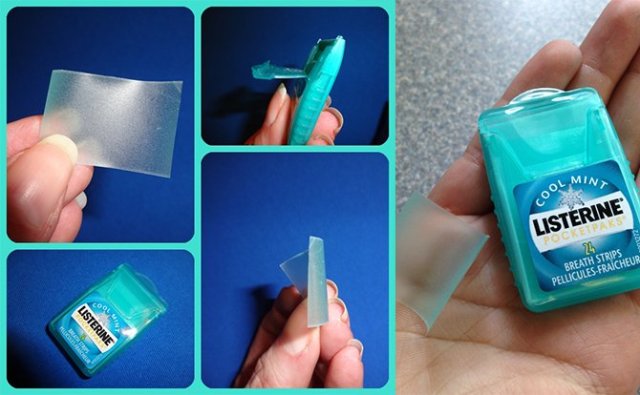
BreathStrips

I ate a packet in one go: I lost a bet about what colour jumper our lecturer would wear.

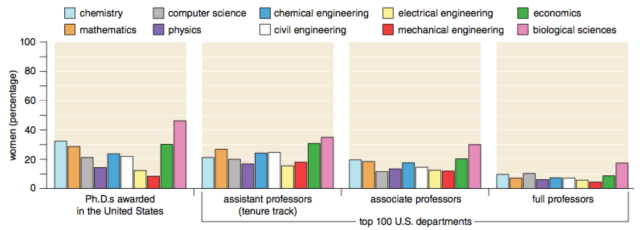
Again, my masters and PhD was 50/50. Which I later found out was intentional. I was so oblivious to maths and gender issues that when my PhD supervisor suggested I go to the “Women in Maths” conference, I asked, “What’s the point in that?”. I didn’t want to go to a conference that targeted my gender and not my research topic. He pointed out the leaky pipeline. I didn’t quite get it. And it sounded like a general career thing bigger than “Women in Maths”. I thought, “But that’s how it is in all sectors”. Essentially, “But that’s just how it is!” Nonetheless, a seed was planted. I went to the conference.

PipeLine_CeciWilliams2012

The leaky pipeline in STEM subjects, 2007. Ceci and Williams (2012)

Fast forward to my postdoc in an ecology department where I had more female colleagues than I’d ever had up to that point! And as a lab, they talked a lot about women in science. At the time it was paradoxical to me, that I would have more women around me, yet more discussion about the lack of women.

That seed planted a few years before was being nurtured and growing. Although I was still, on some level, struggling to see what the fuss was about.

Then a PhD student in my office said that at school she was told that she was, “good at maths for a girl”. I feel blessed, and also ignorant, that this mentality was new to me. And the ludicrousness of it still stays with me.

After this position I went back to a maths department. This time I noticed what I hadn’t noticed before. The culture is different when you’re in the minority. To make it worse, we collaborated with the electricity industry. Whereas in maths, there would be 7-10 men for every women, in electricity, it was 15 to 18. And was the electricity industry having a conversation?!!? Of course not! All-Male panels were a given!

TooManyMan

The theme tune in my head when I go to maths, stats and electricity conferences. SkeptaWe need some more girls in here! We need some more girls in here!

With my new awareness,  I noticed I was being talked over. I would be responsible for cleaning and prepping the data (which, I learned, is not enough to be included as an author). Tasks set to us from our electricity partners were handed to my equal, male-counterpart for him to delegate to me. I would receive the odd comment that made me acutely aware of my gender. Perhaps, without being involved with the conversations previously, I wouldn’t have noticed these behaviours, but now I did, I couldn’t not see them!

I have to be clear, the Mathematics Institute is fantastic. And I recommend anyone, male or female, to get involved if they can. There’s lots of reasons why it’s truly fantastic, the members of the institute being a significant one. And there is a strong awareness of the gender imbalance, and efforts constantly being made to balance it.

For me, and my demeanor at the time, I became less and less enthused with the work. When you try and talk 15 times in a single meeting (I had a tally), you simply stop trying. My confidence was shot. I constantly felt inadequate and that I couldn’t do the work, so I tried less hard. So I really did become less capable. It became a chicken / egg situation.

However, again, this is how I felt. I’m certain some men in a maths department struggle in the same way. It’s essentially a question of confidence and assertiveness, which may be lacking for a plethora of reasons, from language to personality to gender.

As I say, there are real efforts being made to address gender imbalance. There were regular “Women in Science” events and workshops, which I attended with gusto (unlike my PhD self!). We were instructed to not apologise or thank without reason. Don’t say, “May I say..” before saying your point – just say it! Overall, the advice was to not seek permission to be there: own your space, position and intellect.

Armed with this advice I would have two iterations of each email I wrote. One to write what I want, and another to edit it to be more direct. This simple act was surprisingly stressful! I didn’t enjoy sending emails that, to me, felt rude. My personal motto is that it’s nice to be nice! So I dropped the advice to be direct, and in fact, as an act of rebellion, I now sign off all my emails with, “Thanks” instead of “Regards”.

Nice2BNice

My life motto! And I do like a Nice biscuit 🙂

Nonetheless, some of the advice I try to keep. Namely, don’t question your intellect on your subject. I couldn’t really quantify what that looked like until a male colleague and me sent a paper to review. Sitting in the same office, we both read the rejection email at the same time. My heart sunk as I read it. I thought, “We did it all wrong!”. My mind starts spiralling, “Why I’m in research at all?”. But my mind doesn’t spiral far because the first thing that came out my colleagues mouth? “This reviewer doesn’t get it at all!”.

And so now…

What do I think about the issue of women in science? More broadly, how can someone handle their work culture when they feel it opposes their inner culture?

Scientists often leave their field because of a vibe that their well-intentioned colleagues were unconsciously putting out. And perhaps the scientist in question isn’t even aware that it’s getting them down. They put their feelings of dissatisfaction down to other factors. But perhaps those factors would seem manageable if they feel valued and included.

I think we need to discuss our work culture, and invite others who may feel that they’re not entitled to share their opinion, to share their opinion. Learn from others who have worked elsewhere. What’s their impression of the work environment? Take nothing for granted as “This is the way”. Instead, strive for a work environment that can nurture individual creativity and intellect. And this isn’t on HR. We can, and should, figure out ways we can support each other. We all want to love our job, and work with others who also love their job! And perhaps this love-fest will harvest better science!

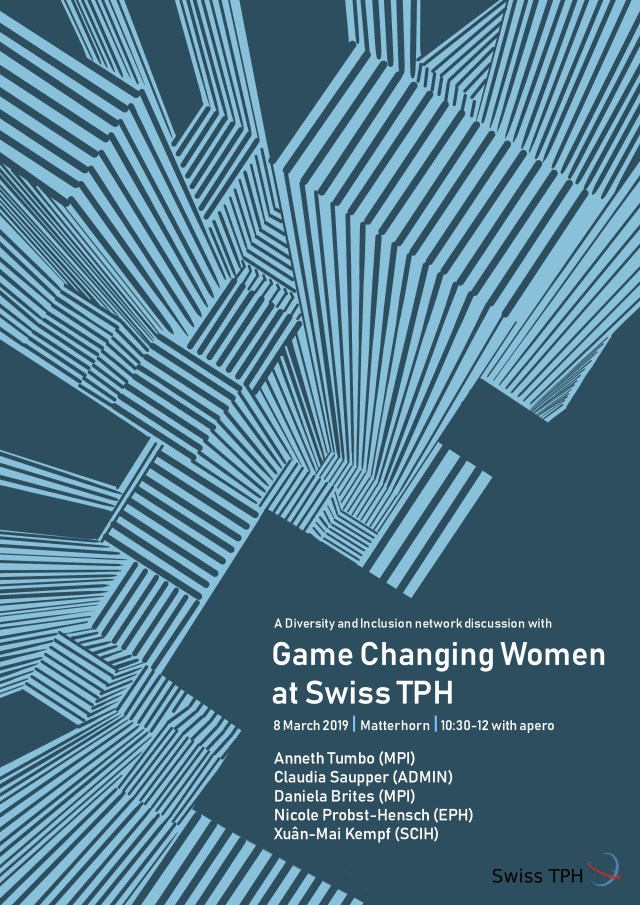
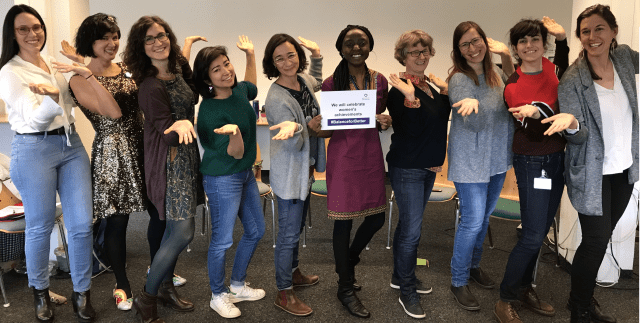
With that in mind, some sterling colleagues of mine organised a “Game changing women at Swiss Tropical and Public Health Institute” event. We had five colleagues honestly and bravely answer some very personal questions. We were astounded at the turn out. There is clearly a desire to help each other find a nuanced path that feels true for each of us. And let’s respect each others outlook, especially when they’re different to ours. What experiences have others had that led to such a difference? Dialogue dialogue dialogue. But maybe that’s just me being a nattering old hen…. Sorry and thank you 😉

GameChangeWomen_posterWithNames.jpg

 Questions posed to panel members here. What would your answers be? Poster designed by Mark Peacock.

Posted in Uncategorized | 1 Comment

Life in colour

LifeInColour_ScreenshotWithAni

A moving and educational short film, which arose from an initial ‘Hello strangers! What shall we make a film about?’, to this in 72 hours. After 24 hours we had the idea and concept. I spent the next 48 hours arguing that we do not include animation – I didn’t like two focal points. But as our film won, I grumbly concede that I don’t know everything about everything.

I like to make short films about my work. I like it, but I don’t really know what I’m doing. Two weekends ago I spent 72 hours taking part in the Exposure Science Hackathon.

It was intense.

Tamsin the team player

I collaborate with a range of people, from industry, to academics from different fields. I’ve taken part in Mathematical Modelling weeks (where, at the beginning of the week you’re introduced to a problem from industry, and in teams, typically of strangers, you spend a week trying to mathematically model and solve it).

In short, I confidently parade on my CV that I am excellent at interdiscplinary work, and communicating science.

Well this weekend I learned that there’s always room for improvement!

Tamsin the creative team player?

Working with maths, yes, there’s creativity. But not to the extent of making a short film. Constant disagreement, frustration and a conscious effort to not walk away. When I make videos on my own there’s no push back! I have full creative control! And consequently, I’m aware that the videos have major flaws. In many ways, working on your own is free and peaceful. (Well, more peaceful – I still argue when it’s only me.) But being part of a creative team forces you to the boundaries of your imagination, or simply see a view point that you would never arrive to alone. It makes the end product so much better, even if you’re not happy with every part of it.

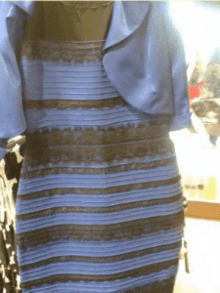
I see white and gold, but…

This video, I’m very proud of. I worked with an excellent team. Whose passion and banging on the table took its toll on my mood. But the end product is worth it. And more than the end product, I learned some technical skills (Adobe Animate), some story telling skills (think about the characters and who they’re talking to), but mostly I learned that creativity is like the white-gold/blue-black dress. I may be convinced that what I’m seeing is obviously the truth, but in reality, it’s just my perception.

Out of seven excellent short films, ours won the jury vote, despite my unwavering disagreement the animations looked naf. But I guess I was wrong… the dress really is blue and black…

The_Dress_(viral_phenomenon)

Exposure Hackathon

I fully recommend the experience. I worked with the talented photographer Dirk Wetzel, fellow scientist Chiara Borsari, who patiently explained covalently bonding cancer drugs about 63 times, and the film maker Theo Blossom, who is as loud as he is thorough and visionary (check out his excellent 3 minute film which gives an important and bleak message in the fun style of Mean Tweets).

The organisers are beyond incredible. And there’s still a chance for the event in Zurich. Film makers! Scientists! UNITE!

ExposureHackathon

Posted in Uncategorized | 2 Comments

Sharing is caring

tamsin.lee@swisstph.ch | tamsin.e.lee@gmail.com | @t_e_lee

SharingThings

We could all share more. I especially could share my food more! I get over excited and scoffle scoffle scoffle. Only once there’s mere mere crumbs left does my mind return to the room, and I offer around something unappetising, “Would you like the remnants of something that was delicious?”

But with science, sharing is an obligation.

Yet I’m rubbish at sharing my codes. I fear that my codes are too messy, and a scary insight into the inner workings of my tangled mind. Certainly I’m guilty of the odd nested for-loop. Oh the shame! Perhaps there’s a Sharing-Code-Anxiety-Disorder? SCAD?

But I shall fling my SCAD out the window and share, share, share. For my latest publication (call the bugle again) I have uploaded the codes to Github.

MeBugleTight

New paper announcement: Lee, T. E., & Penny, M. A. (2018). Identifying key factors of the transmission dynamics of drug-resistant malaria. Journal of theoretical biology.

Also, I plan to slowly go through previous publications and upload the codes and the papers where possible. If the journal is not open source, I’ll upload older versions. All my papers are available here.

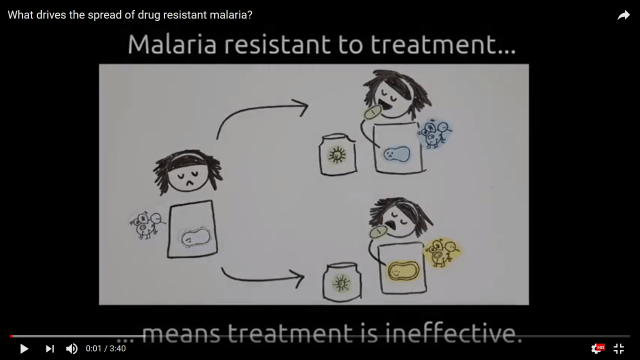
MalariaVideoHead

The content of latest paper was previously blogged about here,  a link to the 3:40 video here, a poster here (presented at ASTMH) , and an early version of the paper here.

And who knows, maybe my code sharing mentality may spill over to not reaching for the last cookie.

tamsin.lee@swisstph.ch | tamsin.e.lee@gmail.com | @t_e_lee

Posted in Uncategorized | Leave a comment

Rhinos and unexpected collaborations

MeBugle

I’m very happy to announce the publication of a paper I thoroughly enjoyed working on:

An evolutionary game theoretic model of rhino horn devaluation.

Nikoleta E. Glynatsi, Vincent Knight & Tamsin E. Lee
Ecological Modelling

The paper itself is nicely explained by the lead author Nikoleta E. Glynatsi, whose blog describes an earlier edition of the paper. Instead I’ll take on the easier task of explaining how this surprising topic came into my life because – well – Rhinos? I’ve already explained that I worked on electricity, and now I work on malaria. But rhinos!?!?

It all began…

At the  University of Melbourne, in the Quantitative and Applied Ecology group, I worked on models to infer when an animal went extinct (how many years without seeing an animal is ‘too long’?). My first paper here was a collaboration of lots of people, including David Roberts (Durrell Institute of Conservation and Ecology, University of Kent), someone I didn’t meet during the creation of this extinction paper.

After this postdoc I move back to England. Of course, it’s worth making the trip from Oxford to Kent to meet this co-author. His office is AMAZING. There are animal parts and homemade dragons and books on everything interesting. Conversing with me was difficult as I developed ADHD in his office, continually interrupting to ask what different objects were.

David mentioned to me about dehorning rhinos to deter poachers. That is, when rhino owners humanly remove rhino horns (but a stub is left – like cutting finger nails), are poachers less likely to kill these rhinos? We discuss the idea of modelling the scenario using Game Theory: one player is a the rhino owner, and the other is the poacher. I didn’t have experience in Game Theory but it became one of those problems I couldn’t stop thinking about. What are the optimum strategies for each player? Do poachers want to kill any rhino irrespective of the horn length? Is it better for rhino owners to spend their limited resources on dehorning all rhinos, or spending some money on extra policing?

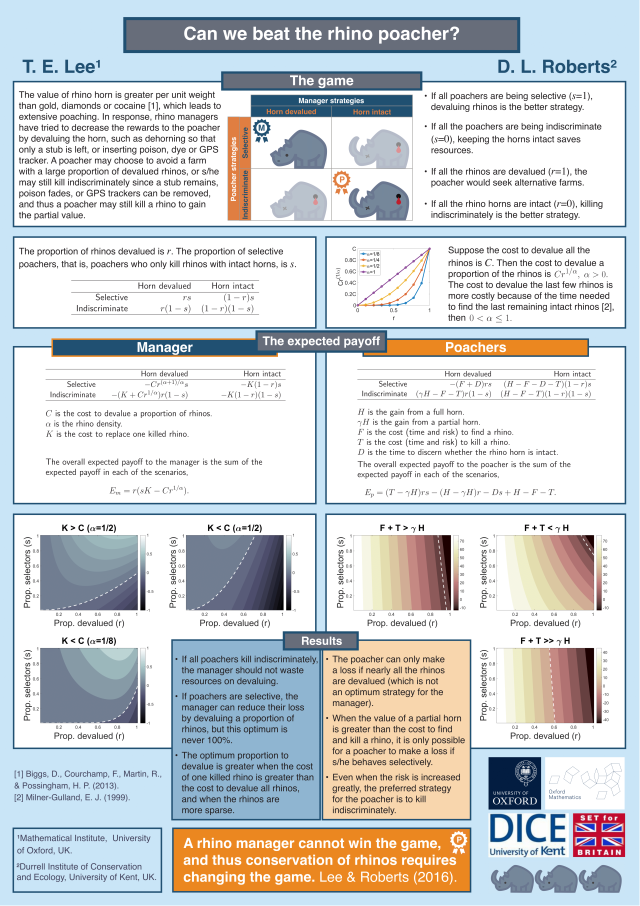
Hooked on quantifying the dynamics, pursuing this model was inevitable. The paper was published*, and I made a beautiful poster of it, with the help of Anna Huzar (who also made a 1 minute video for BBC3 about the topic). Armed with such a pretty poster, and a bit of luck, I was picked to present our poster at the Houses of Parliament for their STEM for Britain event.

LEE3377_v2-1

At this event I meet yet another to-be-great-coauthor. Vince Knight (Cardiff University). He is an expert in Game Theory, and he talks about extending the model to include time and investigate the evolutionary stability. That is, if an equilibrium exists, can it be easily knocked out. So if all poachers are killing indiscriminately, what is the benefit of a new poacher only killing full horned rhinos? Or vica versa. Now, instead of poachers playing against rhino owners, they’re playing against each other in a world whose conditions are created by the rhino owner. What conditions make it difficult for poachers to make a gain by killing only dehorned rhinos, and thus making dehorning an effective deterrent?

And so began a new paper, led by Nikoleta E. Glynatsi, Vince’s PhD student. From here, I again refer to her blog for a description of an earlier edition of the paper. (Note that after excellent comments at the review stage, the paper has been improved to account for the time taken to a kill a rhino.)

Does dehorning work?

So that’s the back story. The work itself? In summary, the first paper with David shows that dehorning doesn’t work, and poachers will still kill rhinos for the remaining stub that is left. This new paper shows that dehorning can work, when implemented along with a strong disincentive framework – such as educational interventions. However, neither paper can stand alone in providing answers to the problem of rhino poaching. The topic is huge, and influencers range from local resources to global markets. This paper merely contributes to the discussion, and as always with research, it will hopefully provide a foundation for further models. And hopefully these new models will come about from equally enjoyable collaborations.

* Lee, T. E. & Roberts, D. L. (2016) Devaluing rhino horns as a theoretical game, Ecological Modelling, 337, 73-78.

Posted in Uncategorized | Leave a comment

DO IT!

DoIt

I know this looks like some impressive GitHub activity. I wish I was that active on GitHub! This is actually part of a project that I have with some friends, where every month we create a piece of art based on a word or short phrase. This month: DO IT!

This is to show that “it” is not really a single event, but an accumulation of daily change to reach your goal. However, when you zoom in, it’s not always, “Today is better than yesterday and tomorrow will be better than today”. There’s lots of ups and downs, but if you persevere, the general trend will be towards your goal. I’ve been told that ending it in red is misleading, because red signifies danger. But also, it’s WINNING! “We find that wearing red is consistently associated with a higher probability of winning.” Hill & Barton (2015) Nature.

This picture is to remind me to keep trying every day. Or at least most days! I have so many goals where my motivation comes and goes in waves. But if I keep putting in the time, it’s guaranteed that I’ll get better and better. So eventually one day I’ll be doing a walking handstand whilst speaking fluent German!

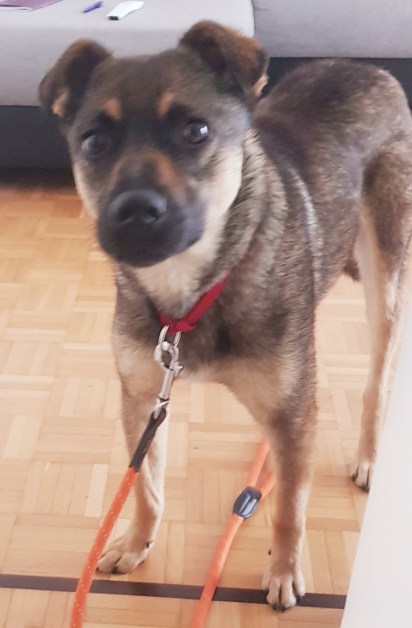
I also want to relate this attitude to a new maths course my mum is taking. She’s dyslexic, and so due to an uninformed education system several decades ago, she gave up on mathematics. But she’s always striving to take on new challenges. Impressive, and I hope I’ve inherited this trait! So in her late 60s she’s started an excellent course offered by the UK government called, Skills For Life. Below is one of the questions she’s got (and our lovely new dog Berry!) which states, Clive plans to walk with a friend along the Cliffs of Moher. Clive wants to carry a total of at least 3 litres of liquid to drink on the walk. He has 2 large bottles of water (750ml each), 2 small bottles of water (500ml each) and 2 cans of soft drink (330ml each). Does Clive have a total of at least 3 litres of liquid?

Berry_SkillsForLIfe.jpg

As someone who grew up with pounds and ounces, this is all foreign to her. However, she always has a fizzy drink in her hand. So I tell her to look at her bottle of Fanta. How many millilitres is it. 500. Right. What about this water bottle I have in my hand. 750. Okay, so if I have two of these water bottles, how many bottles of Fanta would be equivalent. Okay, so now what about this big bottle of water, 1.5 litres. And we do this for a few minutes. I encourage her to look at the weight of everything she eats and drinks to get her head around grammes, kilograms and litres. These simple daily (or mostly daily) checks will make these maths questions more direct to her actual life – skills for life! And so when answering a question about how much liquid Clive, and his mysterious friend, want to carry when walking the Cliffs of Moher, the most intriguing part will be… what are the Cliffs of Moher?

cliffs-of-moher-hero

Cliffs of Moher – good choice Clive.

Posted in Uncategorized | Leave a comment

From electricity to malaria

In January I joined the exciting world of malaria modelling at the Swiss Tropical and Public Health Institute. I’m working with Prof. Melissa Penny to model what drives resistance to malaria treatment.

To go from modelling electricity usage from Smart Meter data at the Mathematics Institute (Oxford University) to malaria modelling is quite a shift.

In some ways, I miss the problems we had with Smart Meters. “Oh how frustrating!”, naive Tamsin would cry out, “How can we predict the half hourly electricity load of 30,000 households when we only have Smart Meter data for 200?!?!”.  I’m no longer working with kWh in households, but with parasites per microlitre of blood in people. And instead of having access to 200, current households, I have… well…. next to nothing. Because if someone has malaria, they’re treated! There’s some data sets from small, limited, case studies. But compared to the data available in electricity forecasting, you’re working blind.

So being new to this field, I’ve started at the basics. In essence, a Susceptible-Infected model. This is where you assume some portion of the population is not infected, but could be infected (Susceptible), and the other portion are infected. A key statistic in such a model is the Reproductive Number. This number represents how many people are likely to result from one infected person. If this number is less than 1, you’re winning!

With malaria, the number of infections arising from one malaria infected person really depends on how often they’re bitten by mosquitoes, and how many people those mosquitoes go on to bite.

Now for drug-resistant malaria, we consider a variant on this measure. For every person with a sensitive infection (an infection which can be treated), how many people with resistant infections result? So the original person would need to be treated, and then develop resistance, and then bitten by mosquitoes who bite others – spreading the resistant infection throughout.

We show that when you consider resistance as a process with several levels, not simply a switch from Sensitive to Resistant, preventing the development of resistance within a host is your best bet at reducing resistance throughout a population. And encouragingly, it’s not about withholding treatment.

infections.jpg

An infection has several stages between it’s original, sensitive form, and a form where it’s resistant to infection.

This is a start, but of course, there’s more to the story. Generally people carry several infections, transmitted from several bites. How do these infections compete within a host? How does this affect the immune system? What about multiple infections transmitted to the host from one very, sad, infected mosquito? What about recombination of different infections in mosquitoes? Oh goodness me… none of this was a problem with Smart Meters….

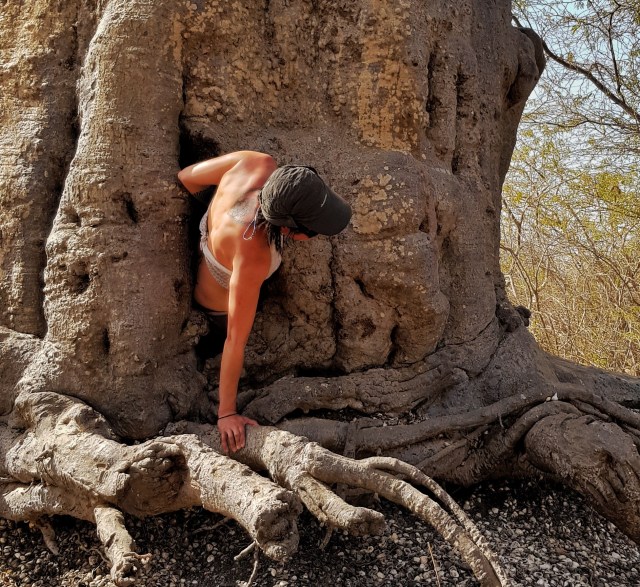
But then again, conferences about electricity never gave me the opportunity to climb into Baobab trees in Senegal, presque comme un vrai petit prince.

meintree.jpeg

Posted in Uncategorized | 2 Comments

The thin blue line

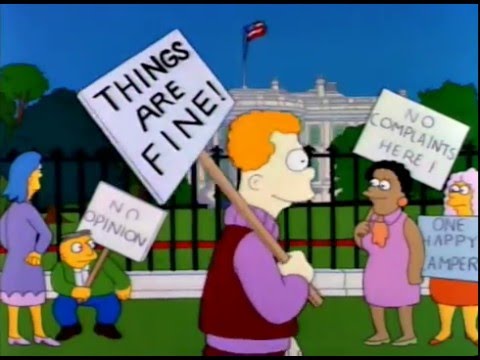
Let’s get angry! The world has many things wrong with it, and often we’re so moved that we make a placard and hit the streets. And protests have proven to be very effective, from Gandhi’s salt march in 1930, to Bolivia ensuring that The Simpsons time slot on TV didn’t change.

ProtestSignWhilst a protest about The Simpsons is unlikely to cause a counter protest, where large numbers of people insist that the Simpsons time slot is changed, other issues are more divisive. And in fact, politicians have a strategic incentive to engage in ‘divisive politics’.  So there is often a split into two angry fractions: the English Defence League versus Unite Against Fascism, pro-choice versus pro-life, or simply “Protest versus opponent”. With more passion than two competing sports teams, but considerably fewer rules, protests and counter-protests can be dangerous. They require more policing than a united demonstration of an equivalent size. However, what is the best strategy for police to keep these two opposing groups apart?
simpsons
This question was raised when I was working at The Mathematical Institute, University of Oxford. There was a workshop about mathematically modelling security, and someone significant in the police force (very unfortunately I can’t remember his name nor title), mentioned that this relatively new phenomenon is a challenge for them. So I made a simple agent based model using NetLogo to start answering this question.

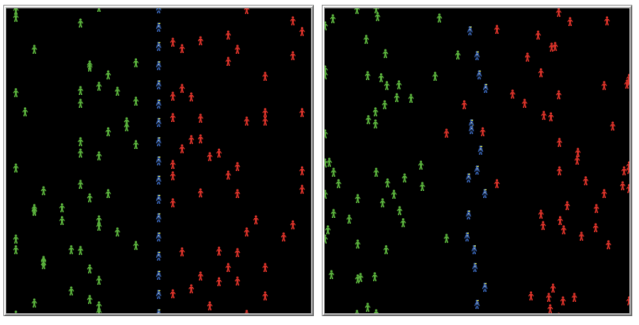
Figure1

I like NetLogo because it’s easy to use, and it’s pretty! It’s nice to watch little 80s style graphics moving around in the name of science 🙂

Netlogo allows you to create ‘agents’, where each agent has it’s own set of rules. For this model, the agents are people. As with any mathematical model, especially ones modelling a new situation, there are many simplifying assumptions. I had two sides of people, red and green. The green people wanted to get on the red side, and vica versa. The thing separating them was a line of blue people, the police. Further details about the rules for each agent are described in the paper, published in the Journal of Artificial Societies and Social Simulation.

What the model shows is that police are best able to keep the two sides separate by forming a human barrier, which works well, even with few police. According to the model, it is more effective if police are not distracted by other protesters, but simply remain as one thin, solid, blue line. However, it should be noted that I have not included violence in this model. Nor have I included protesters interacting with each other.

The model is a long way from being realistic. However, with some input from experts on protesting social behaviour, it could be more powerful. For example, previous work on protesters (which exclude counter protesters) include interactions between protesters and police using game theory. It would be interesting to do something similar, where there are positive and negative interactions among protesters. Perhaps include the influence of ‘mob mentality’, and perhaps a desire to appear on the ‘right side’, by not rising to antagonising behviour. With clear communication between mathematicians and social scientists, these rules can be added, and then one simply sits back and watches the little coloured graphics dance around the computer screen 🙂

The paper is here. The NetLogo code is here.

DownWithThisSortOfThing

Posted in Uncategorized | Leave a comment

The drugs don’t work

Three weeks ago we took in a beautiful rescue dog from Romania. I’ve wanted a dog for a long time and promised myself that it would happen when I got a permanent job. As Sara Pascoe said in a show I was lucky enough to see, “I feel my whole life is waiting to be grown up enough to have a dog”. Well I gave up waiting for a permanent job!

Sadly, it has been aredleash.jpg disaster from the moment we met! He was scared and aggressive – and bundled into the back of our hire car with instructions to keep my face away from him snapping. We named him Red, because he’s beautiful but also a little dangerous. Nearly two weeks later, he’s eating from my hand, and curious where I am as I move around the flat – but still no touchy touchy, so he remains naked. Without a harness we can’t take him outside. He’s stressed and paces the flat. This picture shows a more successful attempt at getting a lead on him, but he gets out of this quite easily – a hardcore harness is required!

I plead with my husband that we carry him in his cage to a small enclosed garden. We let him out but it becomes apparent why my husband was hesitant as Red does not come in until 12 hours later. He stayed out through a thunderstorm, and I stay up all night, waiting for him to be tired, hungry, and wet enough to come back inside. And here he is, very sad to have lost the battle of the wills. When it comes to tenacity, don’t take on an academic!

SoggyRed

Going into week three, and a dog behaviourist tries to get a harness on him. He snaps and lunges at her. On the advice of the behaviourist, the next day we go to the vet with a video of Red. The vet prescribes some sedatives – the aim is to knock out Red, get a harness on him, and then over the coming days, weeks, months, years, whatever, lead him to the garden. Now here’s the maths!

When will he relax!?

We’re given Acepromazine, a sedative which has a half life of 15.9 hours in dogs. The vet told us that it should start wearing off after four hours, which is the same as online advice. So we can assume that whatever drug concentration is in the dogs system after four hours, it is not enough to have an effect. But what effect does one want? The recommend dose for a dog of Red’s size (20kg) ranges between 10 mg and 44 mg. Assuming exponential decay, the concentration of Acepromazine in Red decays over 48 hours like so.

dosage

I assume 10 mg, the bottom of the blue, would chill Red out a bit. The top end, 44 mg is to totally knock him out. The dashed red line is the maximum dosage. Based on the notion that the main effect is within the first four hours, the dashed orange line indicates the minimum required concentration for the “knock ’em out” dose. The dashed yellow line indicates the minimum required concentration for the “chill out Man” dose.

We initially gave Red 20 mg and wait the recommended 45 minutes. He was dozy and chilled, but not knocked out and not yet safe to touch. We give another 10 mg and wait another 45 minutes. Still not safe to approach. And so yes, another 10 mg. By now he is losing body coordination. We try to put a muzzle on him but he fights us. We use towels and gloves to over power him. But I don’t know how,  he finds the strength to squirm and fight us off. The poor boy thinks he’s fighting for his life. He also releases a terrible smell! So we give him the last tablet. By now the first two are wearing off so it’s still within the safe limits.

RedDrugs

But sadly, Red is too wild. His fear of being touched is too great and we do not manage to get a harness on him. He is exhausted but ready to fight and snap at us. So this beautiful boy will go back to the rescue shelter where I hope they find him a home with a garden and other dogs. He will live a happier life where he has more space and friends who understand him better than we do!

This morning Red is not scared of us, but willing to approach us for food. Why I wonder!? So I calculate the drug dosage in his body. Ah yes, at 9am, he has about 20 mg in his body. He’s still a bit chilled!

RedSleep

Coffee

Let’s relate this to the important matter of humans and coffee. Caffeine has a half life of around 5.5 hours. Suppose you have two cups of coffee at 6 am (who wouldn’t need two cups at that time?!), then one an hour later at 7, another at 8 and another at 9am. After these five cups you do not drink coffee for the rest of the day, which may be wise because this high intake is the equivalent of having one cup of coffee at around 7pm. As someone who can be prone to insomnia, this seems like self-harm to me!

coffee

Posted in Uncategorized | 1 Comment