The drugs don’t work

Three weeks ago we took in a beautiful rescue dog from Romania. I’ve wanted a dog for a long time and promised myself that it would happen when I got a permanent job. As Sara Pascoe said in a show I was lucky enough to see, “I feel my whole life is waiting to be grown up enough to have a dog”. Well I gave up waiting for a permanent job!

Sadly, it has been aredleash.jpg disaster from the moment we met! He was scared and aggressive – and bundled into the back of our hire car with instructions to keep my face away from him snapping. We named him Red, because he’s beautiful but also a little dangerous. Nearly two weeks later, he’s eating from my hand, and curious where I am as I move around the flat – but still no touchy touchy, so he remains naked. Without a harness we can’t take him outside. He’s stressed and paces the flat. This picture shows a more successful attempt at getting a lead on him, but he gets out of this quite easily – a hardcore harness is required!

I plead with my husband that we carry him in his cage to a small enclosed garden. We let him out but it becomes apparent why my husband was hesitant as Red does not come in until 12 hours later. He stayed out through a thunderstorm, and I stay up all night, waiting for him to be tired, hungry, and wet enough to come back inside. And here he is, very sad to have lost the battle of the wills. When it comes to tenacity, don’t take on an academic!

SoggyRed

Going into week three, and a dog behaviourist tries to get a harness on him. He snaps and lunges at her. On the advice of the behaviourist, the next day we go to the vet with a video of Red. The vet prescribes some sedatives – the aim is to knock out Red, get a harness on him, and then over the coming days, weeks, months, years, whatever, lead him to the garden. Now here’s the maths!

When will he relax!?

We’re given Acepromazine, a sedative which has a half life of 15.9 hours in dogs. The vet told us that it should start wearing off after four hours, which is the same as online advice. So we can assume that whatever drug concentration is in the dogs system after four hours, it is not enough to have an effect. But what effect does one want? The recommend dose for a dog of Red’s size (20kg) ranges between 10 mg and 44 mg. Assuming exponential decay, the concentration of Acepromazine in Red decays over 48 hours like so.

dosage

I assume 10 mg, the bottom of the blue, would chill Red out a bit. The top end, 44 mg is to totally knock him out. The dashed red line is the maximum dosage. Based on the notion that the main effect is within the first four hours, the dashed orange line indicates the minimum required concentration for the “knock ’em out” dose. The dashed yellow line indicates the minimum required concentration for the “chill out Man” dose.

We initially gave Red 20 mg and wait the recommended 45 minutes. He was dozy and chilled, but not knocked out and not yet safe to touch. We give another 10 mg and wait another 45 minutes. Still not safe to approach. And so yes, another 10 mg. By now he is losing body coordination. We try to put a muzzle on him but he fights us. We use towels and gloves to over power him. But I don’t know how,  he finds the strength to squirm and fight us off. The poor boy thinks he’s fighting for his life. He also releases a terrible smell! So we give him the last tablet. By now the first two are wearing off so it’s still within the safe limits.

RedDrugs

But sadly, Red is too wild. His fear of being touched is too great and we do not manage to get a harness on him. He is exhausted but ready to fight and snap at us. So this beautiful boy will go back to the rescue shelter where I hope they find him a home with a garden and other dogs. He will live a happier life where he has more space and friends who understand him better than we do!

This morning Red is not scared of us, but willing to approach us for food. Why I wonder!? So I calculate the drug dosage in his body. Ah yes, at 9am, he has about 20 mg in his body. He’s still a bit chilled!

RedSleep

Coffee

Let’s relate this to the important matter of humans and coffee. Caffeine has a half life of around 5.5 hours. Suppose you have two cups of coffee at 6 am (who wouldn’t need two cups at that time?!), then one an hour later at 7, another at 8 and another at 9am. After these five cups you do not drink coffee for the rest of the day, which may be wise because this high intake is the equivalent of having one cup of coffee at around 7pm. As someone who can be prone to insomnia, this seems like self-harm to me!

coffee

Posted in Uncategorized | 1 Comment

Heart healer revealer

How much time is needed to get over someone? To answer that question, we need a tool that reveals the healing process of the heart: a broken heart barometer! So I offer such a tool in the form of this basic spreadsheet.

To begin, let us define what “getting over someone” actually means. Assuming, that you can only be in love with one person at a time, let us define “getting over someone” to be the period of time between the end of one relationship, and when you’re ready to fall in love again.

Years together (cell B5)

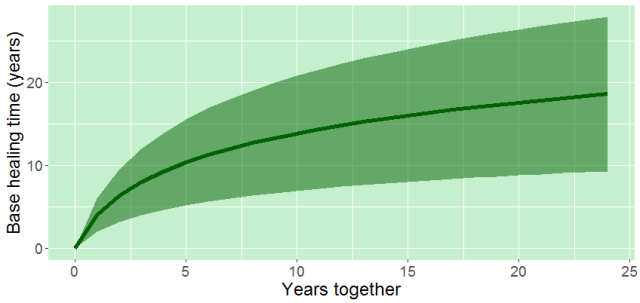
I’ve heard a basic rule of thumb that this takes twice as long as your relationship. I don’t believe this to be true because we interpret time on a log scale. That is, the additional year in a relationship from 2 to 3 years is more significant than an additional year for a 20 year relationship. So let us improve upon this basic linear model by stating that the basic healing time is on a log scale, and while we’re at it, let’s add some upper and lower bounds.

YearsTogether

Notice that this is very pessimistic, more pessimistic than it taking half the time. However later we’ll see that this reduces when one considers the quality of the new beau or belle lined up in your life.

But before we think about this new venture, we discuss other factors that affect the time taken to heal. Now each broken heart is individual, so instead of trying to capture everything, I’ve focused on three universal factors.

I will now describe these three factors, and how I assume they affect the healing time. However, I’m open to your opinion about how these factors affected you should you be willing to share.

1. Contacting your ex (cell B6)

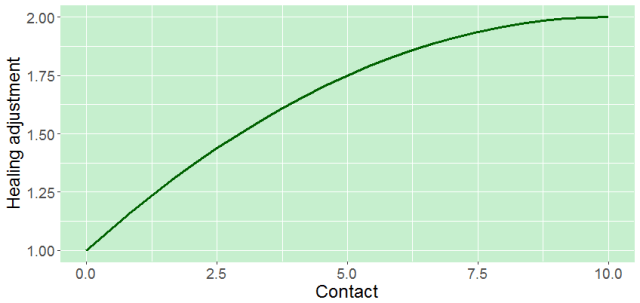
I assume that if you contact each other several times a day then it will take twice as long to heal. But the difference between contacting each other daily to several times a day, is minimal. And at the low end of the scale, increasing contact from never to approximately once a year, has a greater effect.

To help you apply the model to your situation, I suggest the following guide: 10 is more than once a day, 9 is daily, 8 is 5-6 times a week, 7 is 2-4 times a week, 6 is once a week, 5 is once every two weeks, 4 is once a month, 3 is once every three months, 2 is once every 6 months, 1 is once a year, and 0 is less than once a year.

Control

2. Lack of distractions (cell B7)

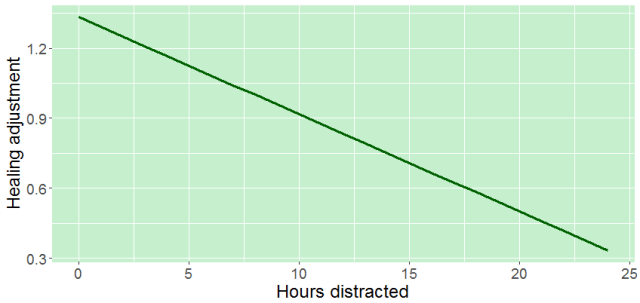
How many hours a day are you left to ruminate? I’ve assumed the effect is linear. That is, the effect of an extra hour of distraction during the day is equally important, no matter whether you’re already very distracted or it’s your only hour distracted. The function is set so that 8 hours a day is average. Less than 8 hours means that you’re loosing sleep and sadly, it will lengthen your recovery time. More than 8 hours will reduce your recovery time. Hopefully, this will encourage you to take up a new hobby and reduce those sad hours!

Distracted

3. Victimisation: How much control you had over the break up (cell B8)

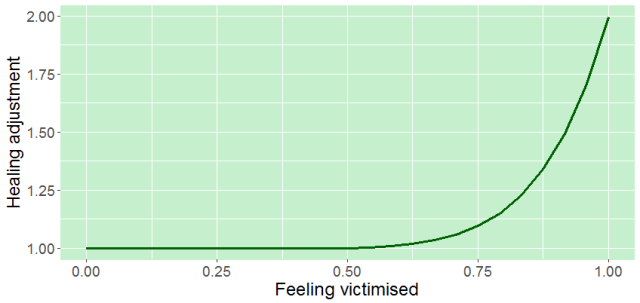
I understand that this is difficult to quantify. Perhaps your ex committed an act that you can’t tolerate. Under this circumstance, do you have the control? So for this factor I would suggest you think about whether you feel you have the control, or whether you feel the break up was inflicted upon you. If it was totally your decision, then your victimisation factor is 0, whereas 0.5 means that it was a mutual agreement. It is assumed that anything between these two scenarios has an equal affect on your healing time. But once the situation is one where you feel victimised by either your partner or the world, then healing becomes more difficult. The maximum is 1 which corresponds to a situation where you were dumped apparently out the blue, or your loved-one died unexpectedly.

Victimised

The quality of your new partner

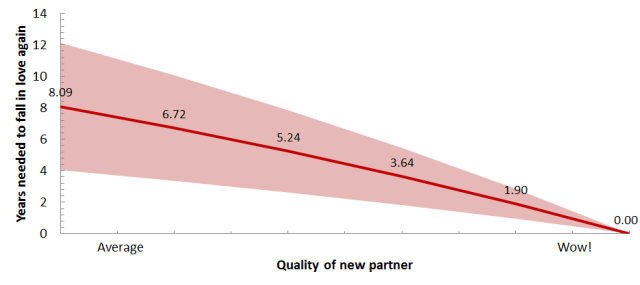
I wanted to include the possibility that, given the right circumstances, you may fall in love again immediately. I’ve encapsulated this by considering the varying quality of the new partner, which is considered to be a log scale (like the “Years together”). Here is a sample output for someone who was in a 10 year relationship, this person was in total control of the break up (0) , but not sleeping (distractions 0), and s/he felt in total control of the break up (0). So to fall in love with a decent person would take approximately two to three years.

HHR_OutputExample

Pinch of salt!

Please note that this is a bit of fun. In reality, moving on is about so much more than I can include here, and each relationship is unique, and requires a different amount of time to process and move on. But for some fun – have a go here!

Posted in Uncategorized | Leave a comment

Cordillera Huayhuash

In September 2017 I was fortunate enough to hike the Cordillera Huayhuash, Peru – one of the most beautiful treks in the world. If you have the magic triplet of time, money, and health all aligned, I strongly recommend doing this trek.

20170925_080047-01
The whole trek is above 4,000km, so the concern of altitude sickness is very real. But we went with an excellent tour organiser. Every morning and evening we were asked to rate everything from headaches, to stomach problems, and they measured our oxygen saturation using a small, noninvasive, clip on our finger. Now, not only was I fortunate enough to have the magical triplet, an excellent tour organiser (which provided a lot of peanut butter – a fail safe way to win my approval), but my fellow trekkers were a happy, healthy and considerate group. And most importantly, tolerated me collecting their oxygen saturation data to play around with upon my return to normality.

I have returned!

The data

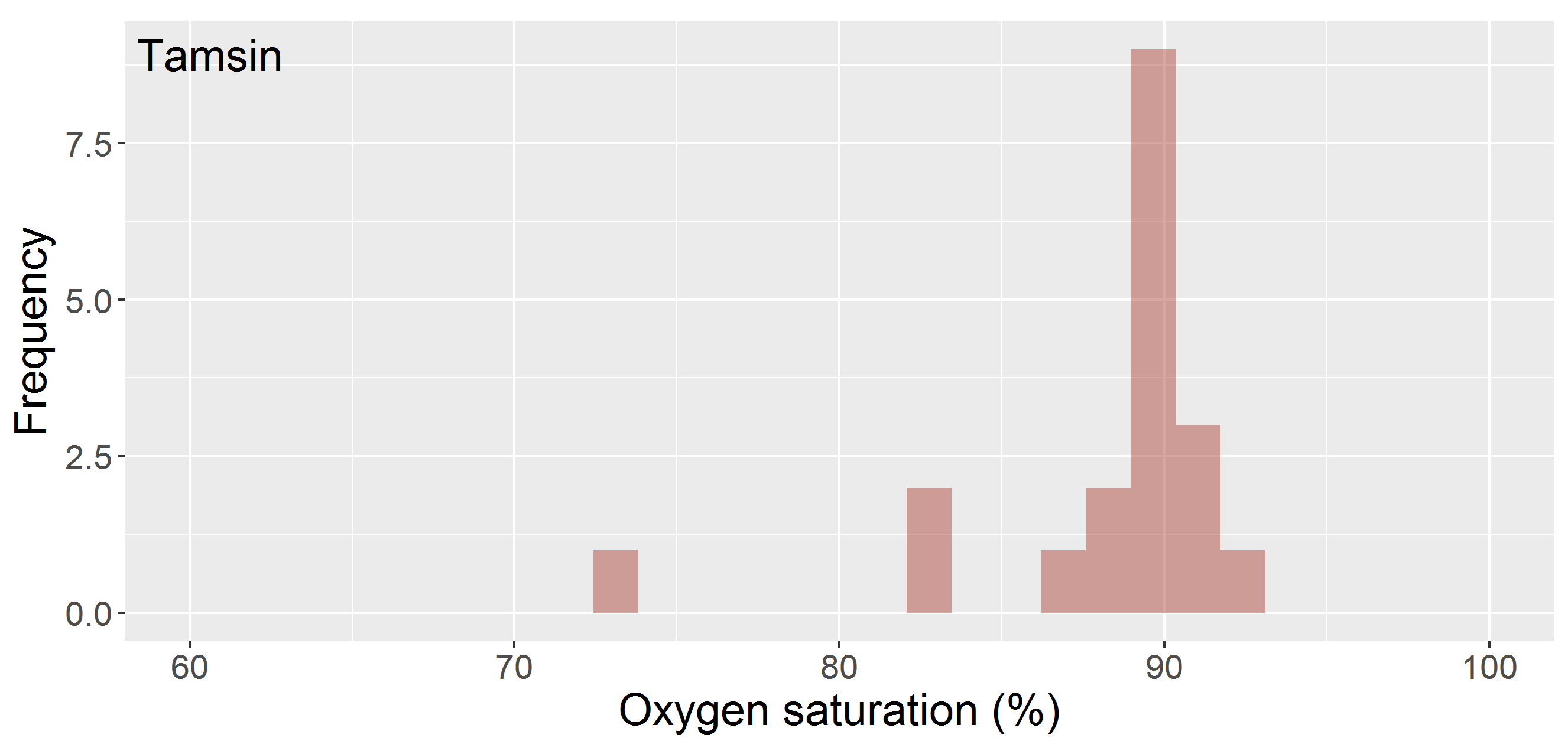
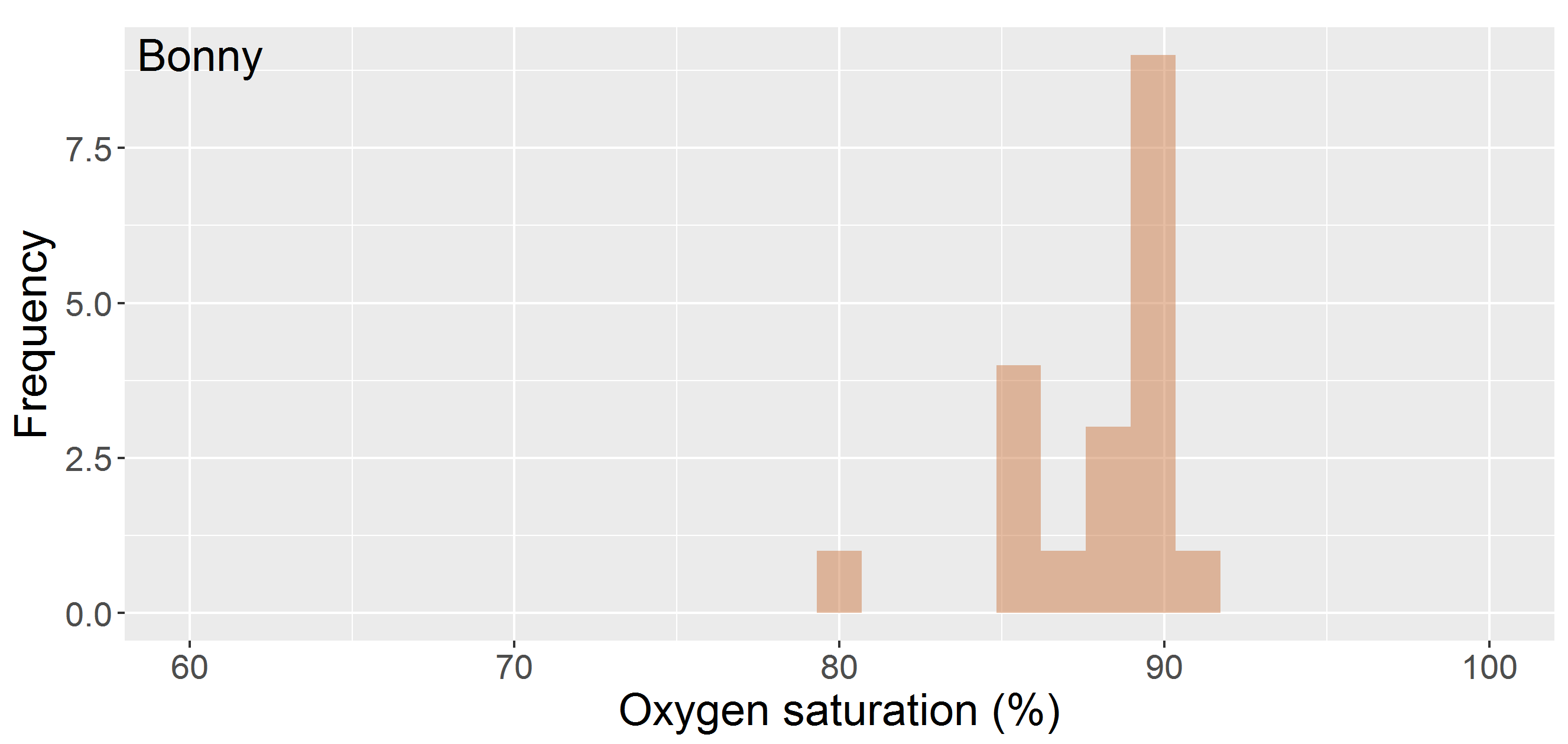
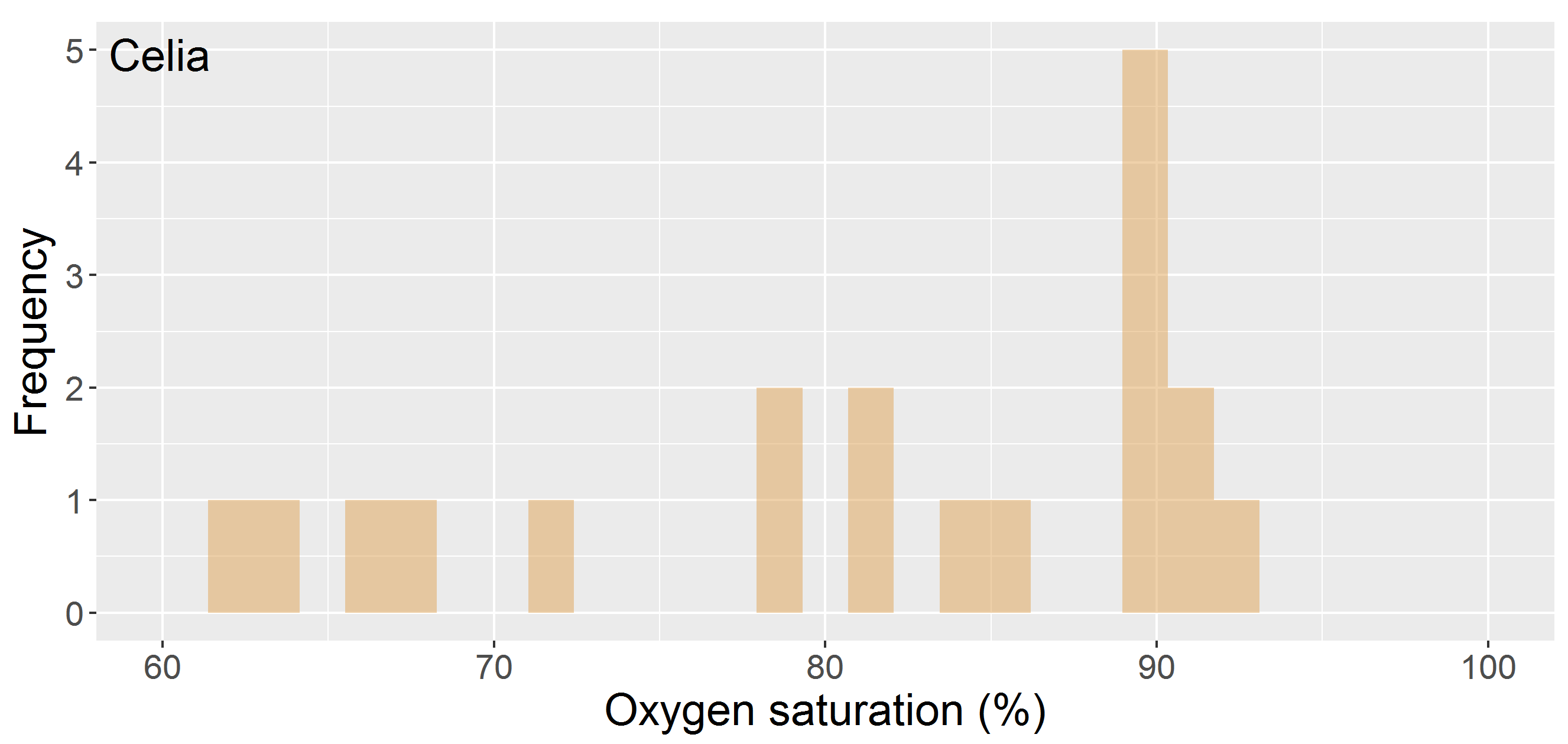
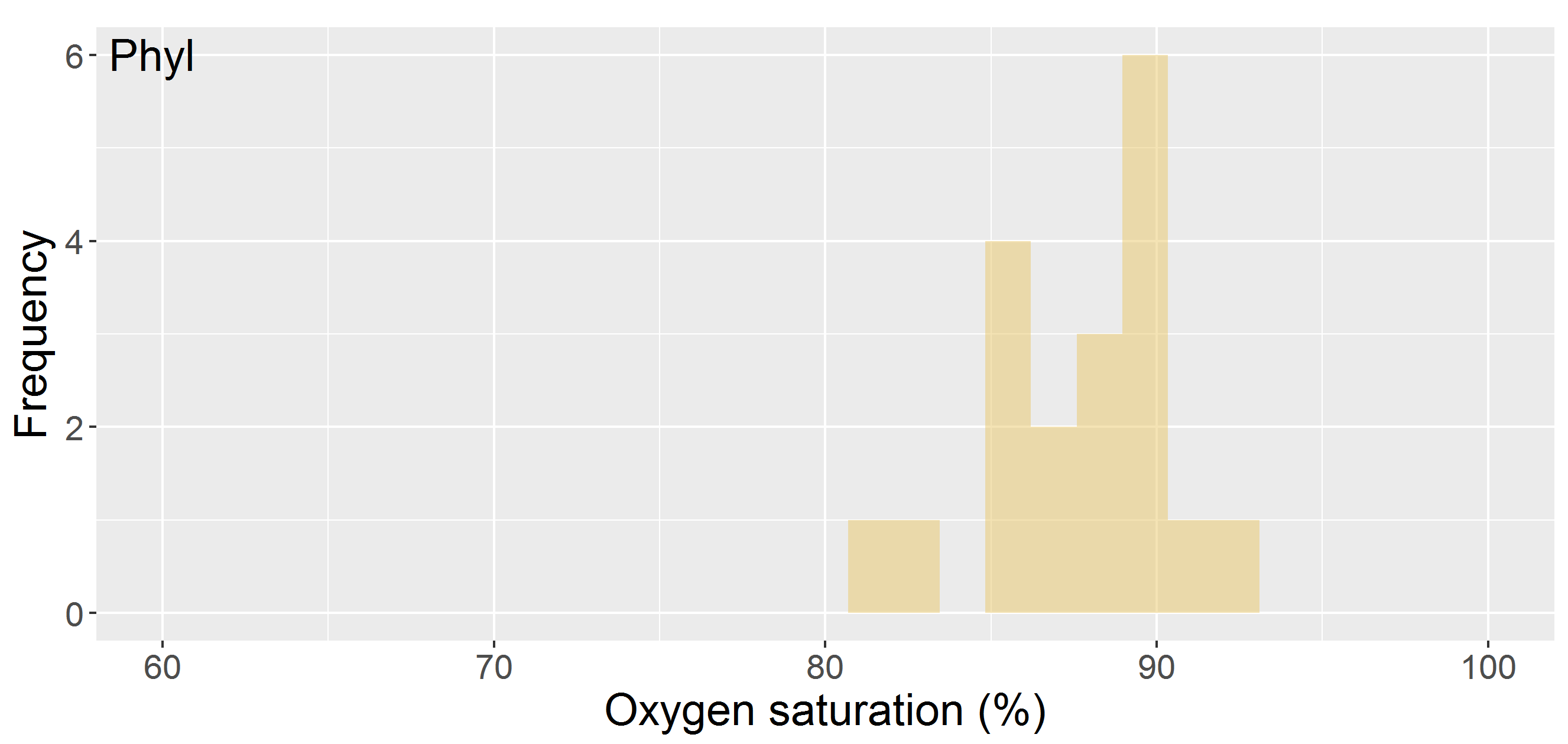
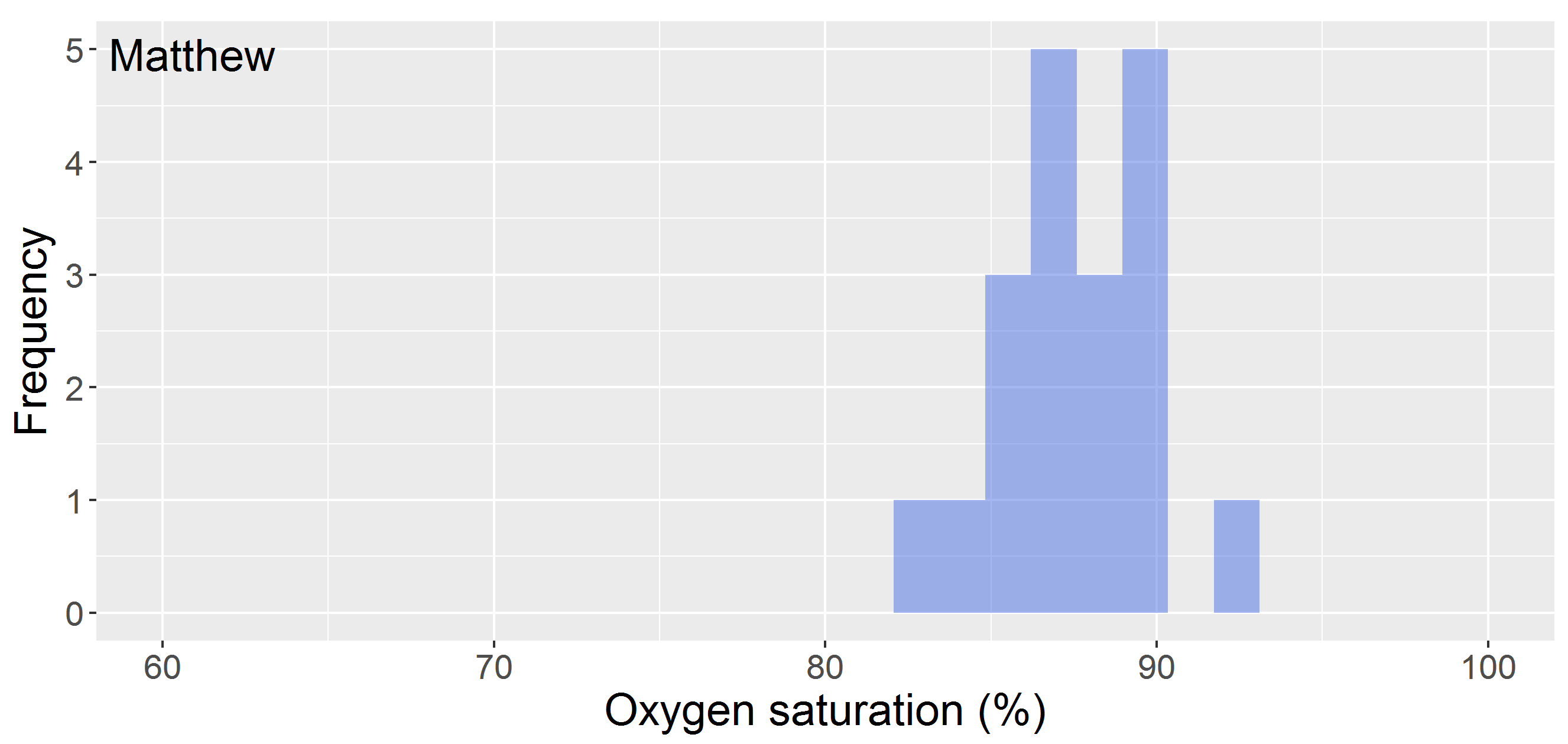
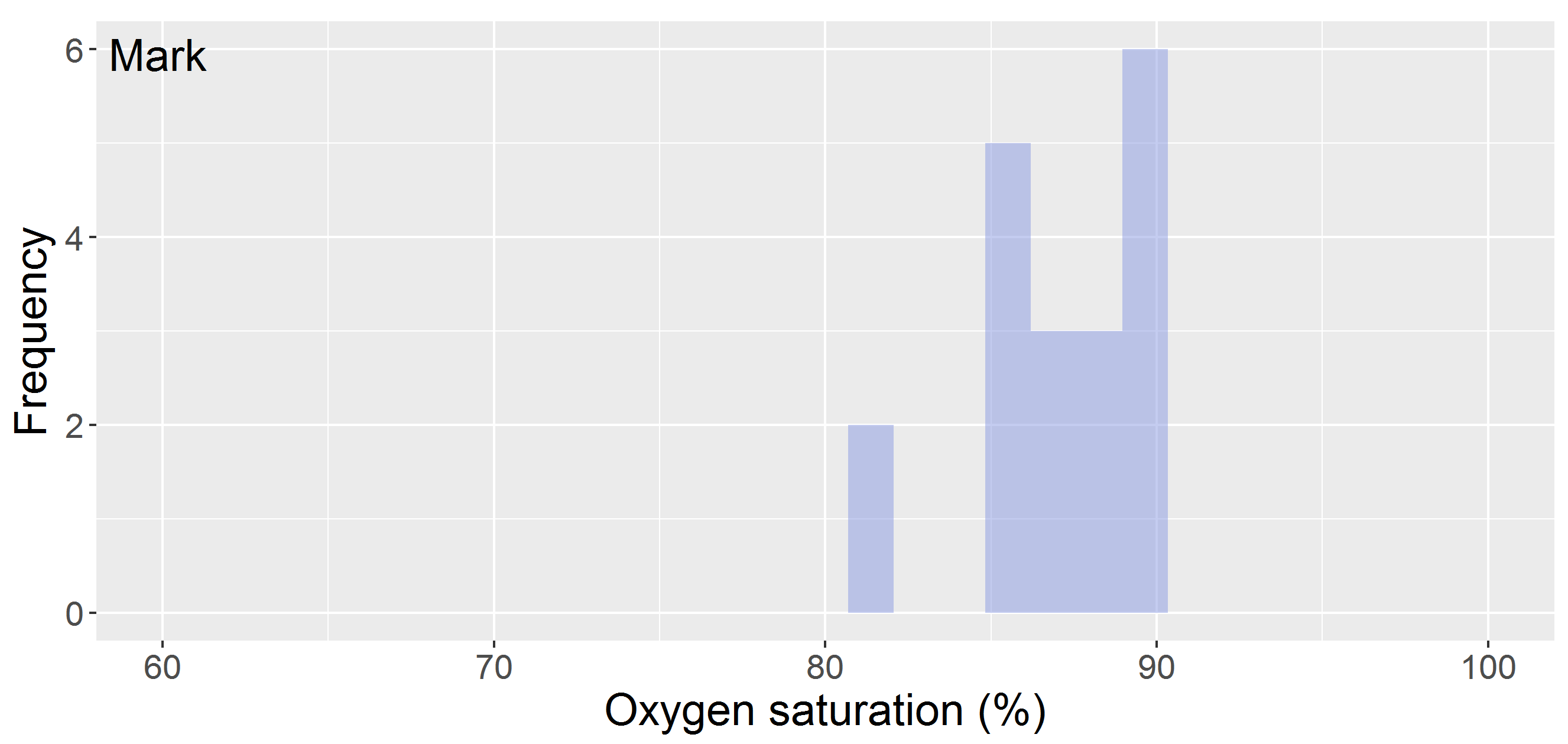
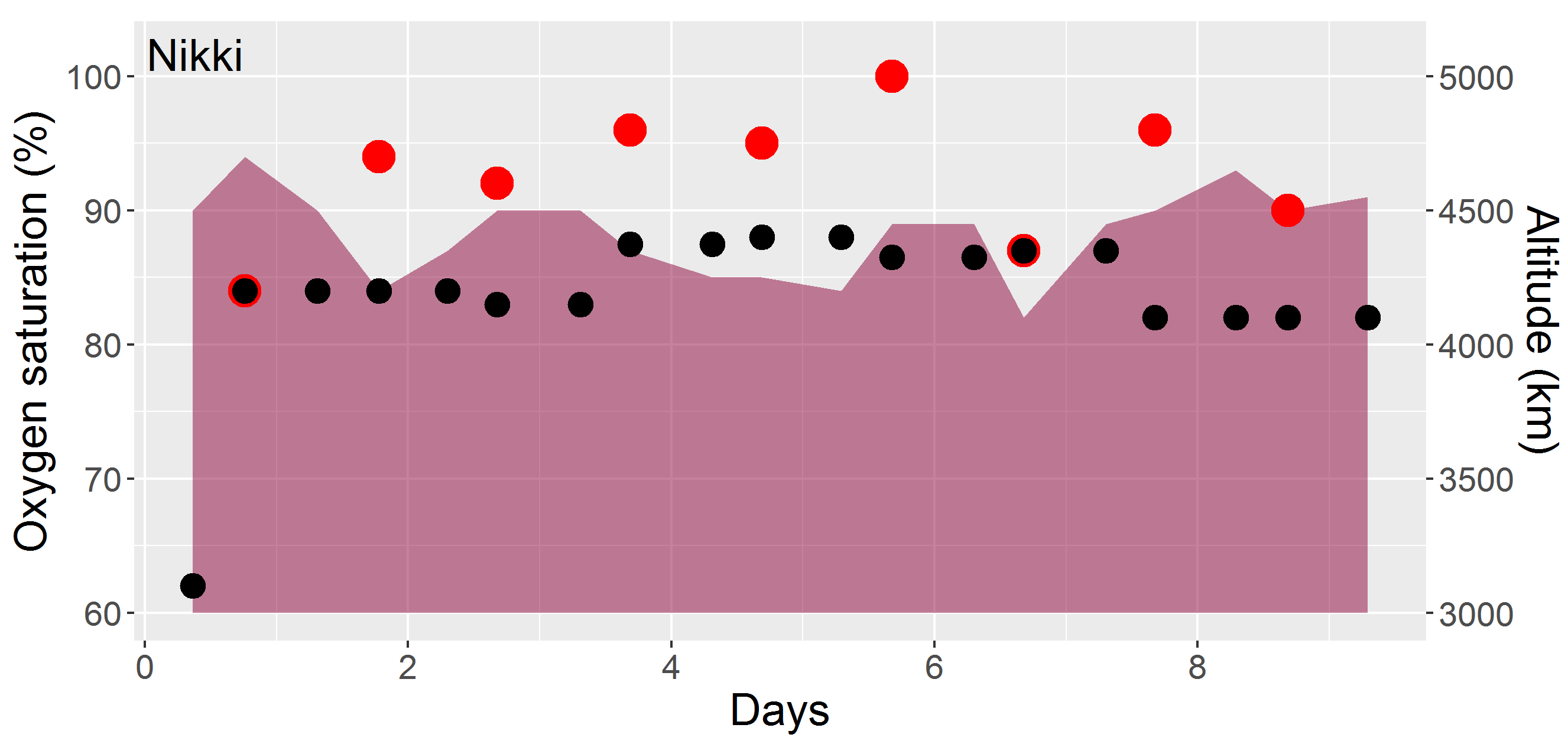
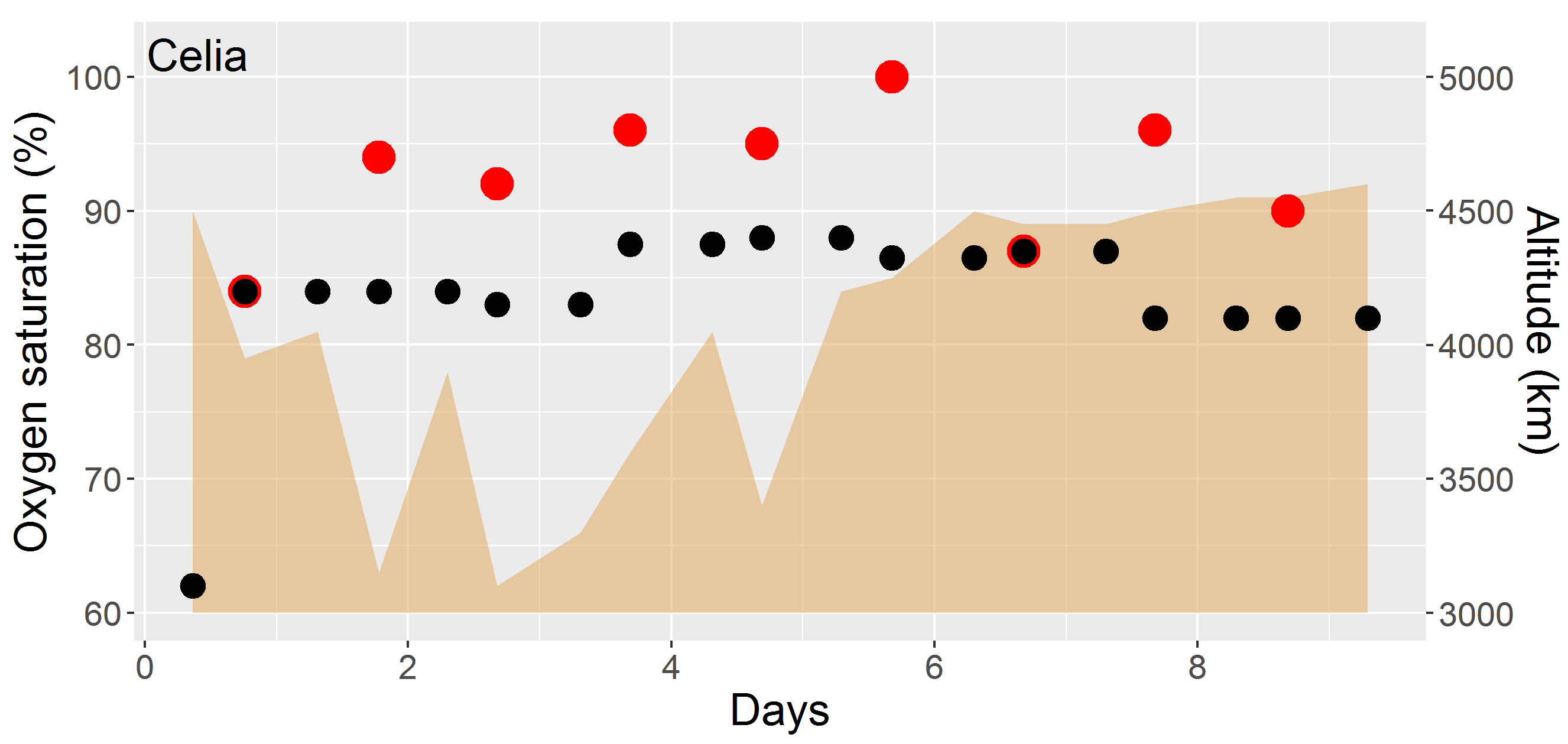
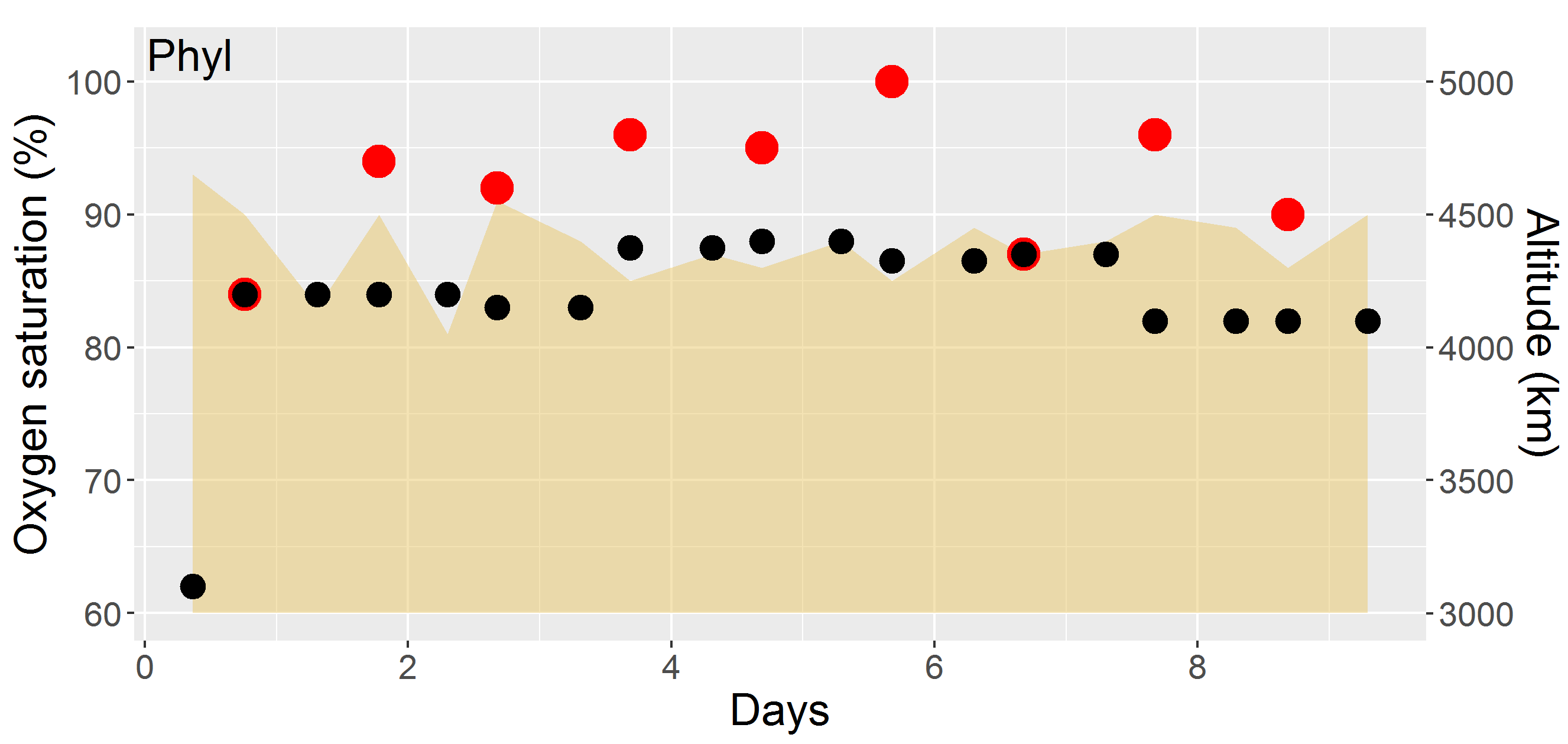
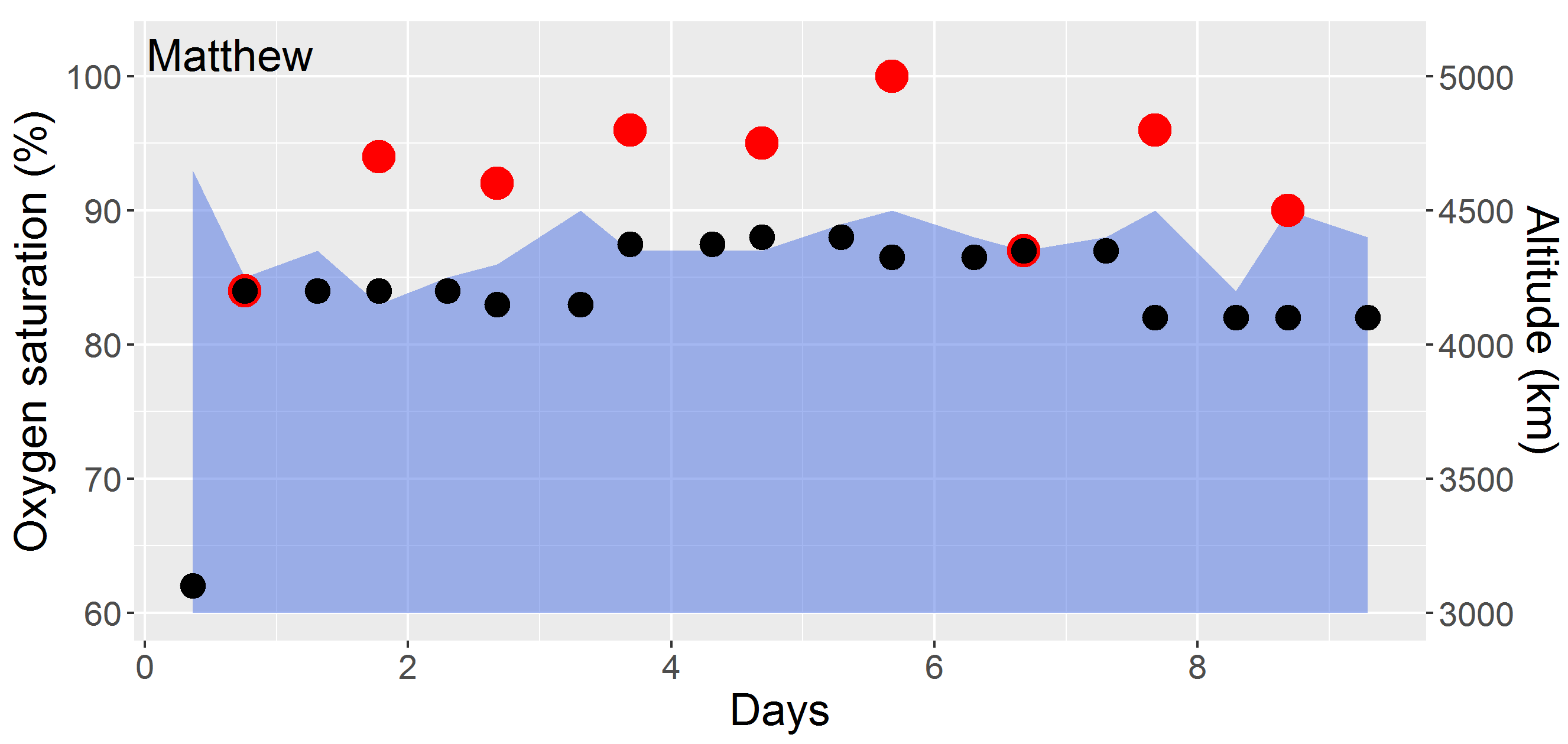
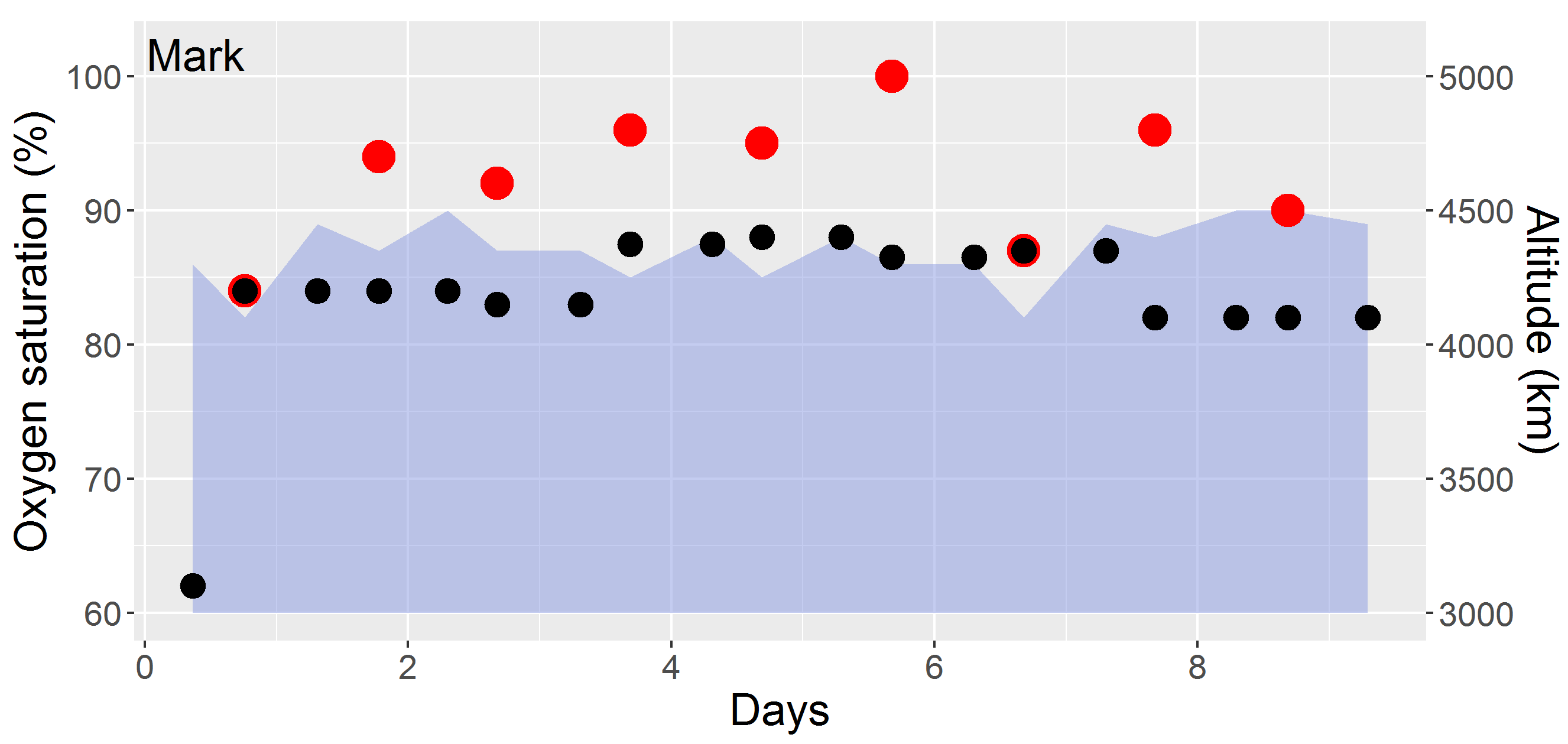
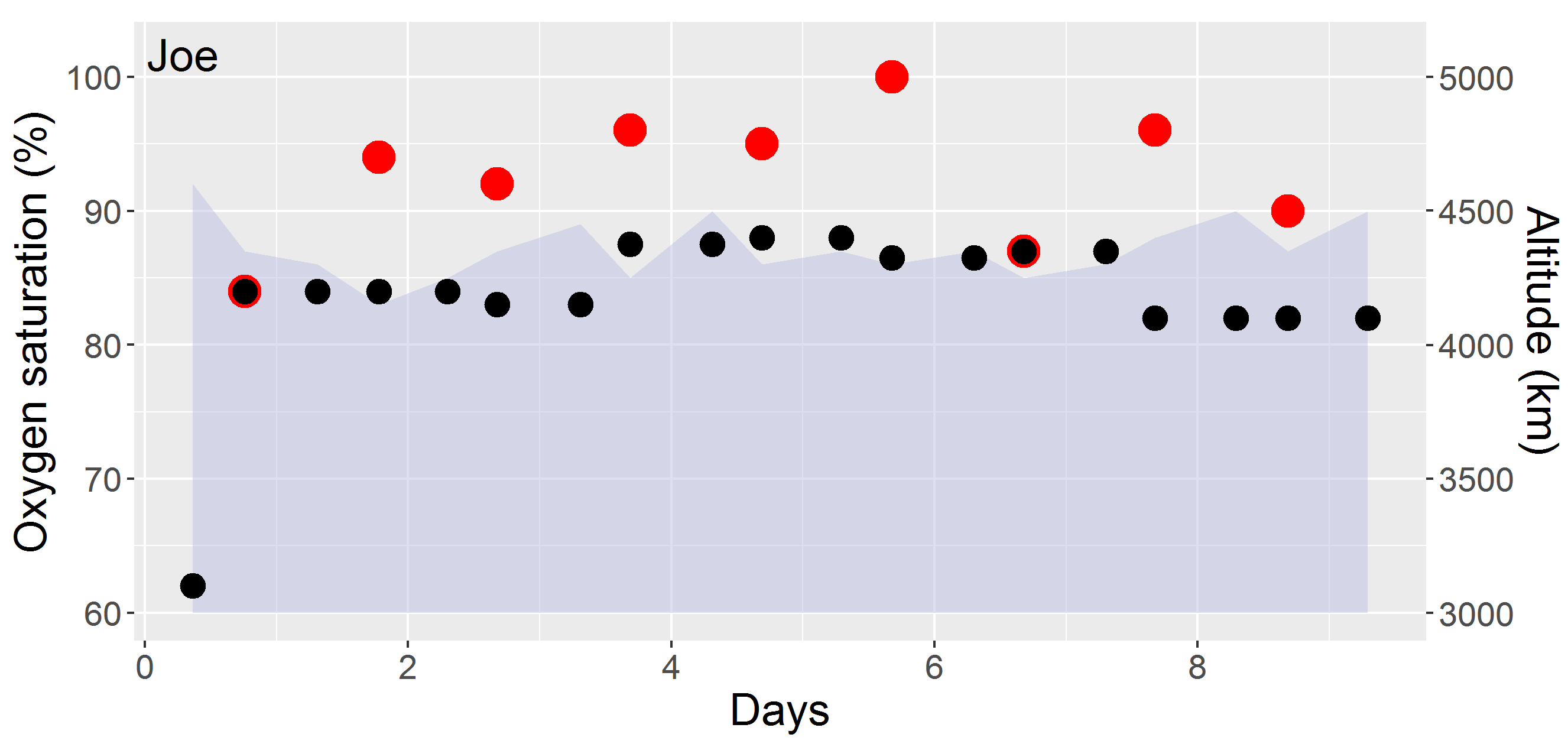
There were five women, aged between 24 (Nikki) to 56 (Phyl), and three men, aged between 24 (Matthew) and 60 (Joe). Bonny was taking Diamox, a medication to help acclimatise. Half way through Celia also started Diamox.

The altitude measure refers to the altitude we were at when measuring our oxygen saturation. When measuring the oxygen saturation in the evening, the highest altitude we reached that day was also recorded (the red circles in time series plots). We all completed the treks with smiles, although some more tired than others 🙂

Analysis

With our very limited data set, there is not a clear correlation between altitude and oxygen saturation. Age, nor gender, seems to bear a relationship on the ability to acclimatise. This conclusion is reinforced when one sees the dendrogram, (using Ward’s method), where the clustering was based on our individual distributions (see histograms). For example, Joe and Matthew, the two extremes of our age range, are deemed to have the most similar distributions. However, as one can see from the histograms, all the distributions are generally very similar, except for Celia. That is, generally, everyone’s saturation was above 80% with a regular measurement of around 90%. Celia, who felt poorly until she started taking Diamox, has the widest range of oxygen saturation. The difference she must have felt after taking Diamox is apparent from her time series.

Conclusion

Altitude sickness is unpredictable and indiscriminate. However, Diamox really works! Bonny, who knew she was prone to alititude sickness, took Diamox before starting the trek, and throughout the trek. Her oxygen saturation is similar to the rest who were not taking Diamox. So if you know you’re prone to altitude sickness, take it*! And if you’re unsure, take it with you, and take it* as soon as you start feeling poorly.
* I am not a medical doctor! Talk to a doctor before taking any medication!

scatter

Dendro

20170920_120928-01

Posted in Uncategorized | Leave a comment