
In January I joined the exciting world of malaria modelling at the Swiss Tropical and Public Health Institute. I’m working with Prof. Melissa Penny to model what drives resistance to malaria treatment.
To go from modelling electricity usage from Smart Meter data at the Mathematics Institute (Oxford University) to malaria modelling is quite a shift.
In some ways, I miss the problems we had with Smart Meters. “Oh how frustrating!”, naive Tamsin would cry out, “How can we predict the half hourly electricity load of 30,000 households when we only have Smart Meter data for 200?!?!”. I’m no longer working with kWh in households, but with parasites per microlitre of blood in people. And instead of having access to 200, current households, I have… well…. next to nothing. Because if someone has malaria, they’re treated! There’s some data sets from small, limited, case studies. But compared to the data available in electricity forecasting, you’re working blind.
So being new to this field, I’ve started at the basics. In essence, a Susceptible-Infected model. This is where you assume some portion of the population is not infected, but could be infected (Susceptible), and the other portion are infected. A key statistic in such a model is the Reproductive Number. This number represents how many people are likely to result from one infected person. If this number is less than 1, you’re winning!
With malaria, the number of infections arising from one malaria infected person really depends on how often they’re bitten by mosquitoes, and how many people those mosquitoes go on to bite.
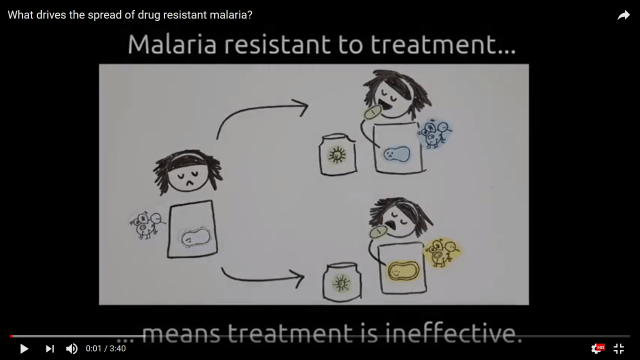
Now for drug-resistant malaria, we consider a variant on this measure. For every person with a sensitive infection (an infection which can be treated), how many people with resistant infections result? So the original person would need to be treated, and then develop resistance, and then bitten by mosquitoes who bite others – spreading the resistant infection throughout.
We show that when you consider resistance as a process with several levels, not simply a switch from Sensitive to Resistant, preventing the development of resistance within a host is your best bet at reducing resistance throughout a population. And encouragingly, it’s not about withholding treatment.
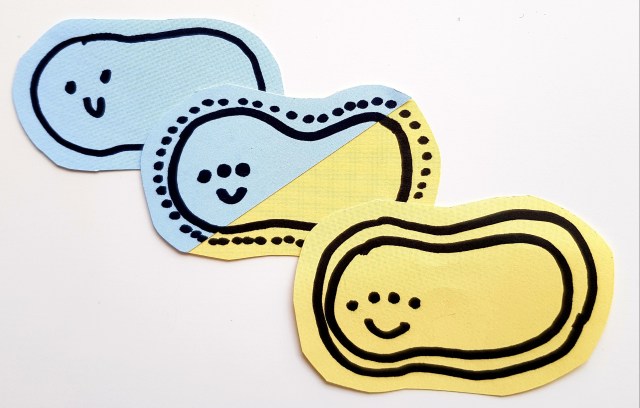
An infection has several stages between it’s original, sensitive form, and a form where it’s resistant to infection.
This is a start, but of course, there’s more to the story. Generally people carry several infections, transmitted from several bites. How do these infections compete within a host? How does this affect the immune system? What about multiple infections transmitted to the host from one very, sad, infected mosquito? What about recombination of different infections in mosquitoes? Oh goodness me… none of this was a problem with Smart Meters….
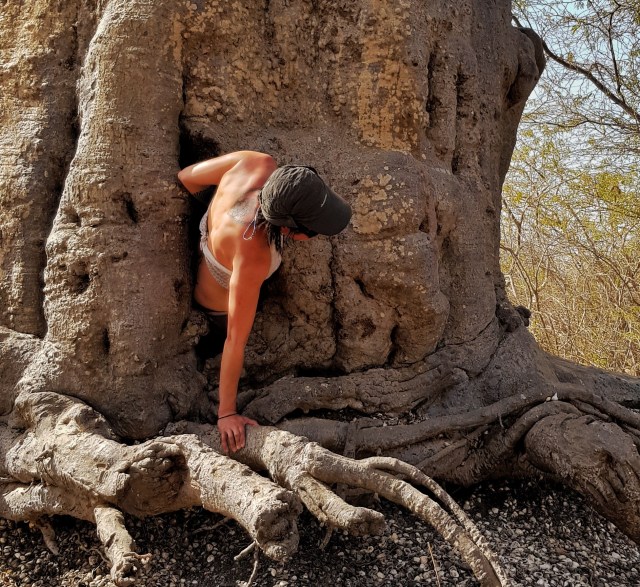
But then again, conferences about electricity never gave me the opportunity to climb into Baobab trees in Senegal, presque comme un vrai petit prince.


 Tamsin E. Lee
Pingback: Sharing is caring | Tamsin E. Lee
Pingback: Estimating antimicrobial resistance | Tamsin E. Lee